Bondi to Coogee on foot, pool to pool
About six kilometres of cliff path link Bondi and Coogee, dipping to a beach every few minutes. Pack goggles: there are ocean pools at almost every bay, and the walk is better wet.
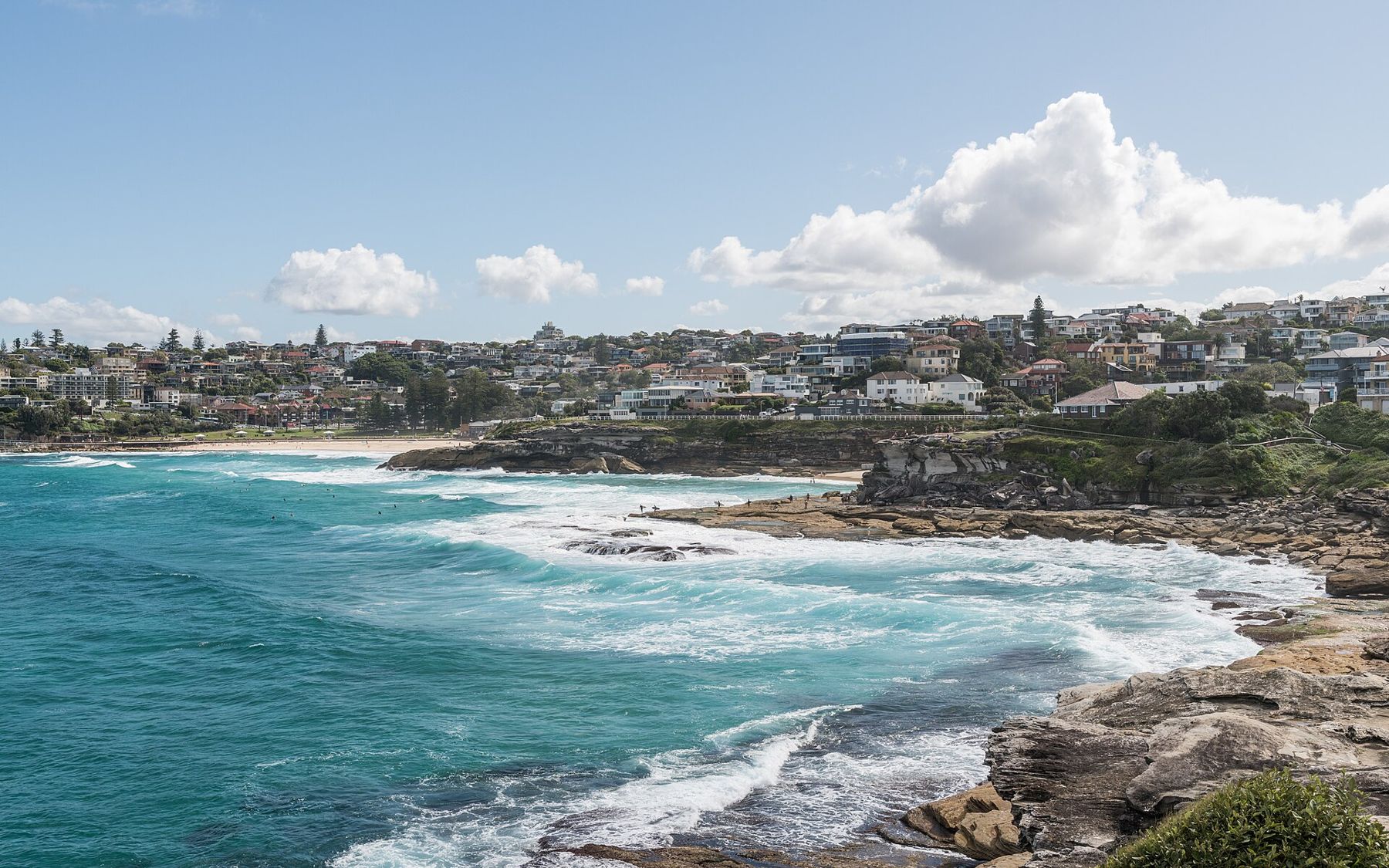
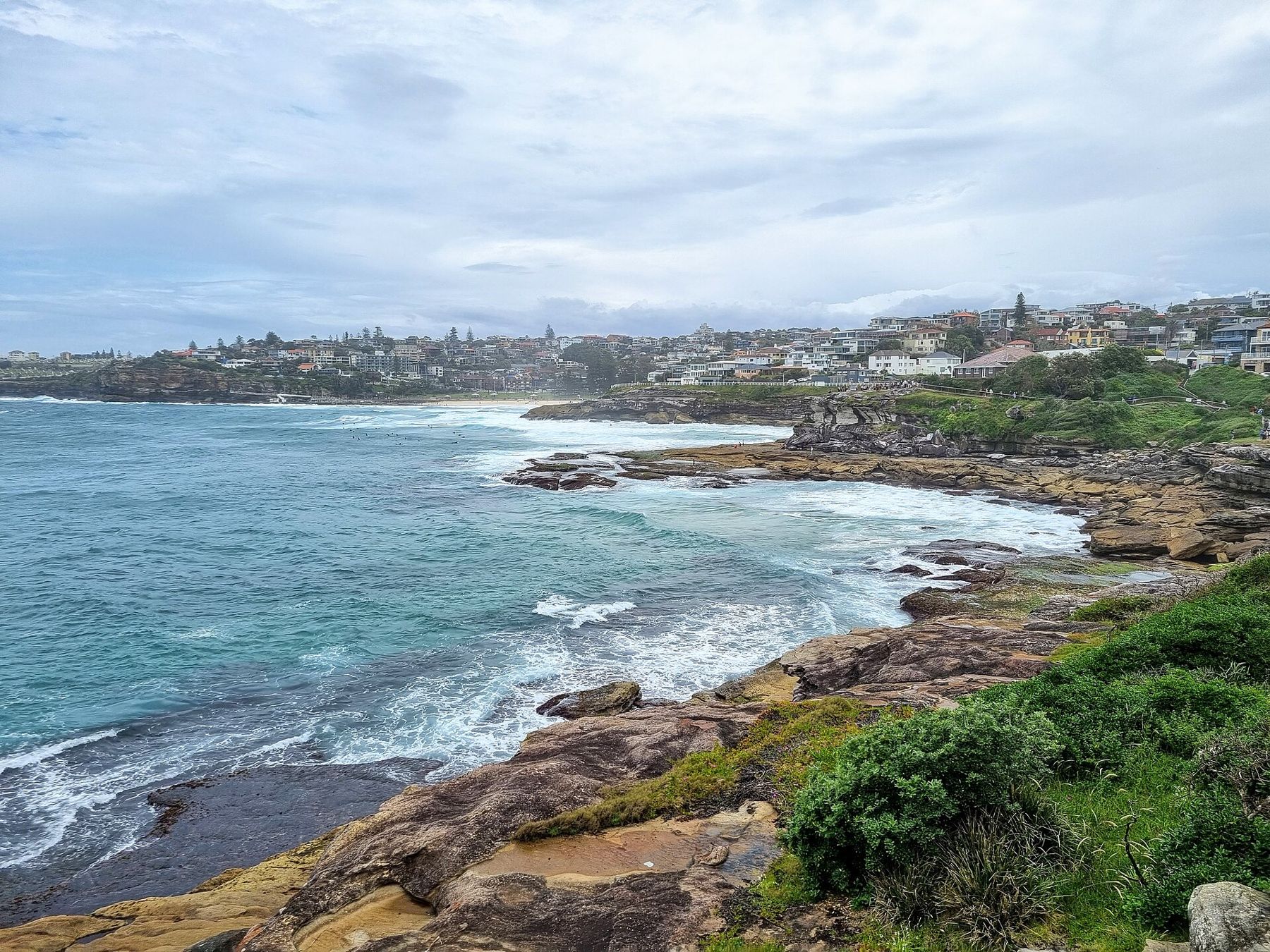
The walk from Bondi to Coogee is Sydney's best-known coastal path, and for good reason. In about six kilometres it passes five beaches, a string of sandstone headlands, a clifftop cemetery and more ocean pools than you could reasonably swim in on one morning. It is not wilderness: houses and apartments line much of it, and on a fine weekend it is busy from end to end. But the sea is always beside you, and the rock and water change at every turn.
This coast is Gadigal and Bidjigal Country, and the headlands and bays along it were places of fishing, gathering and ceremony long before any path was laid. Some of the rock platforms still carry engravings. Treat them, and the coast, with respect.
Most people walk south from Bondi, with the sun behind them in the morning. Allow two to three hours without long stops, and the better part of a day if you plan to swim, picnic and dawdle.
Bondi to Tamarama
The path starts at the southern end of Bondi Beach, beside the pool on the rocks that the story on Bondi Icebergs covers in detail. Climb the steps past the pool and you are on the cliff, looking back across the whole curve of Bondi.
The first headland is Mackenzies Point, where the path runs through Marks Park, a grassy slope with wide views and a few benches. In late spring this stretch hosts Sculpture by the Sea, a free outdoor exhibition that fills the headland and the beach below with large works for a few weeks. It is a fine sight but brings big crowds; if you want a quiet walk, avoid those weeks.
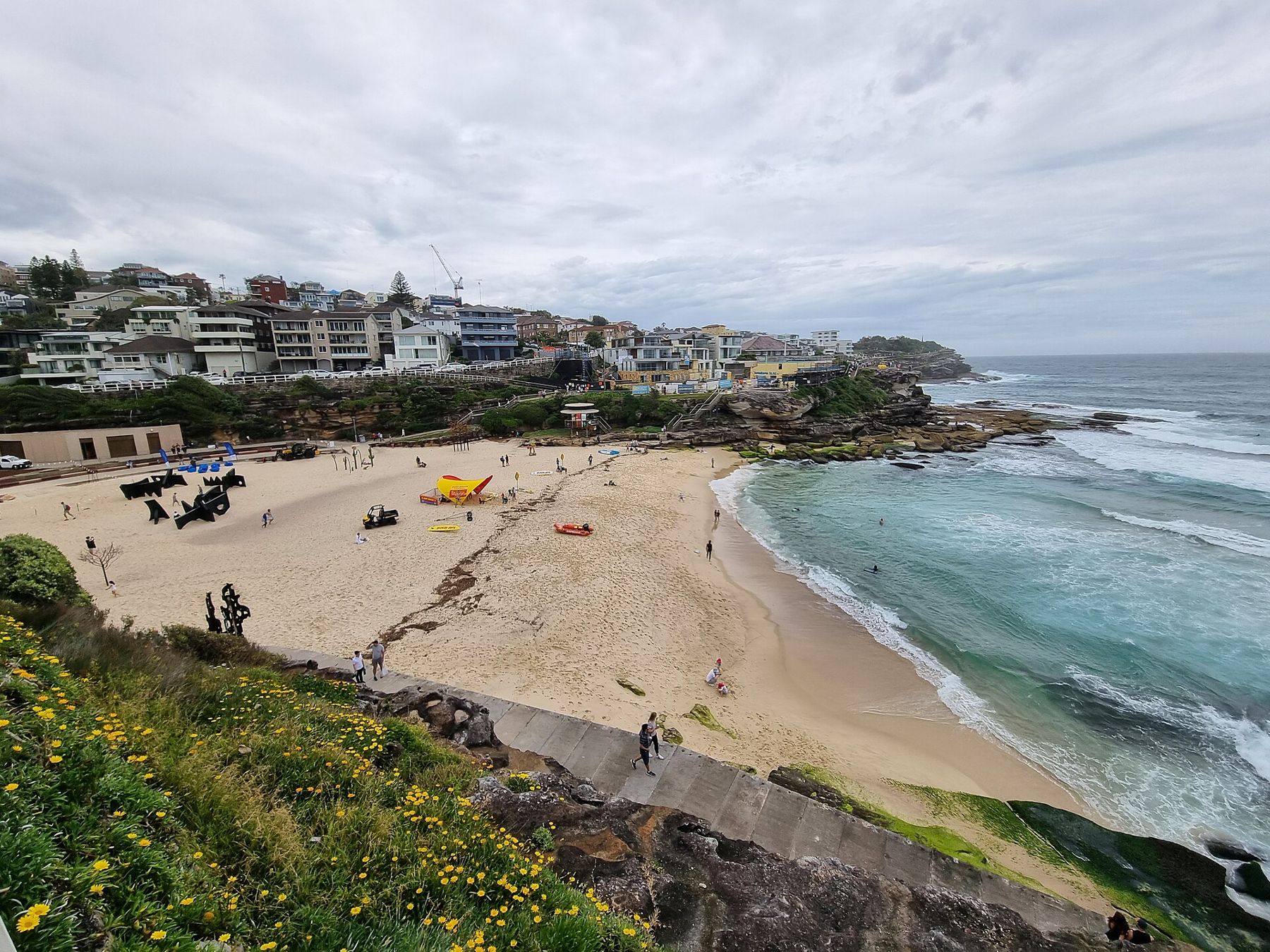
Below the point, Tamarama is a small, steep beach squeezed into a narrow valley. It looks inviting, but its rips are notoriously strong, and it is no place to swim outside the flags or when it is unpatrolled.
Bronte and the baths
From Tamarama the path climbs again and rounds a rocky point before dropping to Bronte. This is the first serious place to swim. At the southern end of the beach, under the cliffs, Bronte Baths is a free ocean pool with a long history of family swimming and winter regulars, and just beyond it is the Bogey Hole, a natural rock pool sheltered by boulders. The guide to Bronte Baths tells the full story.
Bronte Park, behind the beach, has lawns, shade, picnic tables and toilets, and it is the natural halfway stop. Like Tamarama, Bronte Beach has a strong rip, so if you swim in the surf, stay between the flags.
Past Waverley Cemetery
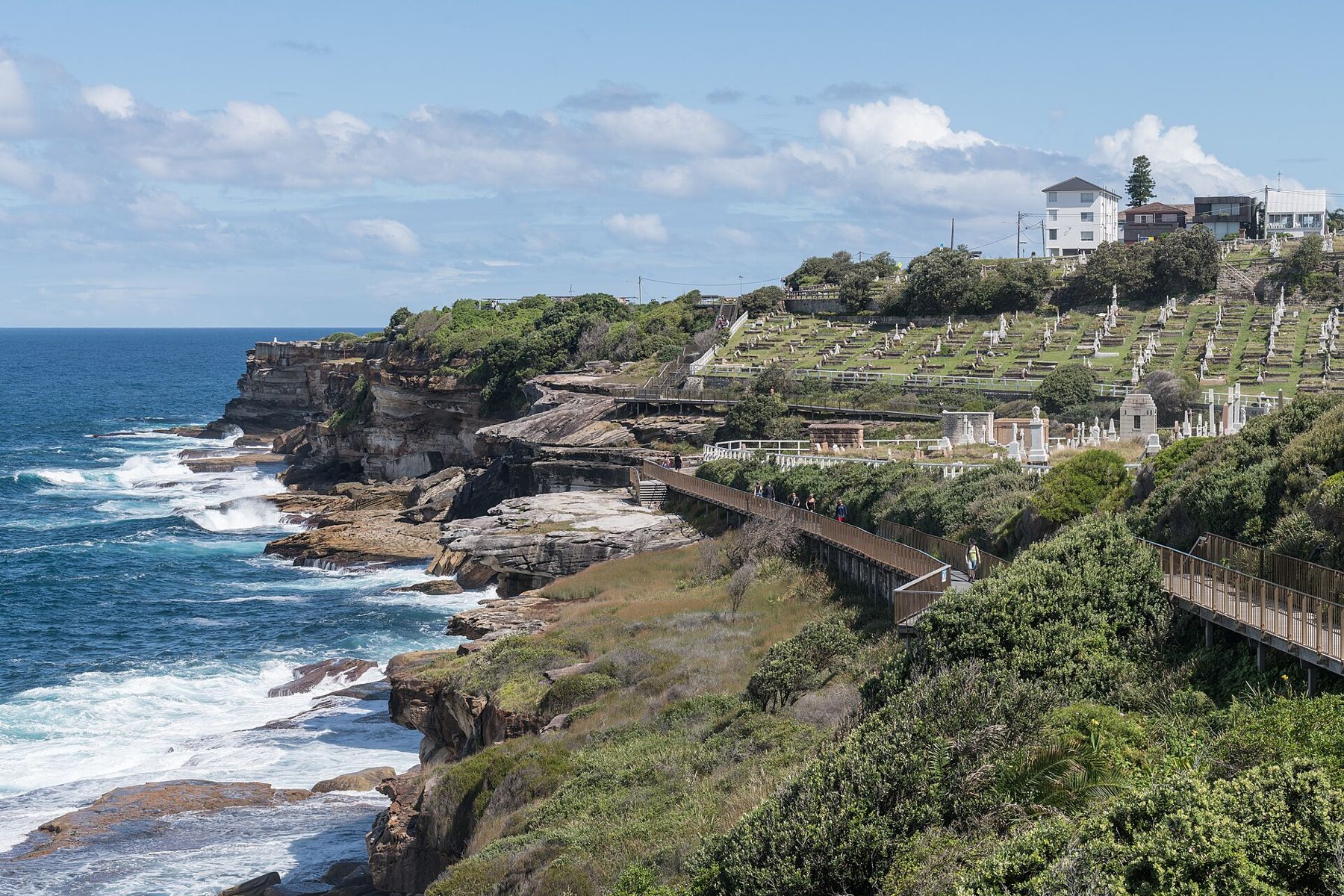
South of Bronte the path climbs to Waverley Cemetery, one of the most striking sights on the whole walk. Opened in the 1870s, it covers a sloping headland right on the cliff edge, row upon row of white headstones and monuments looking out to sea. Among those buried here are the writer Henry Lawson and many other well-known Sydney names.
A timber boardwalk runs along the cliff below the cemetery, with the ocean breaking on the rock ledges beneath. It is a place to walk quietly. People come here to visit graves as well as to look at the view, so keep voices down and stay on the paths.
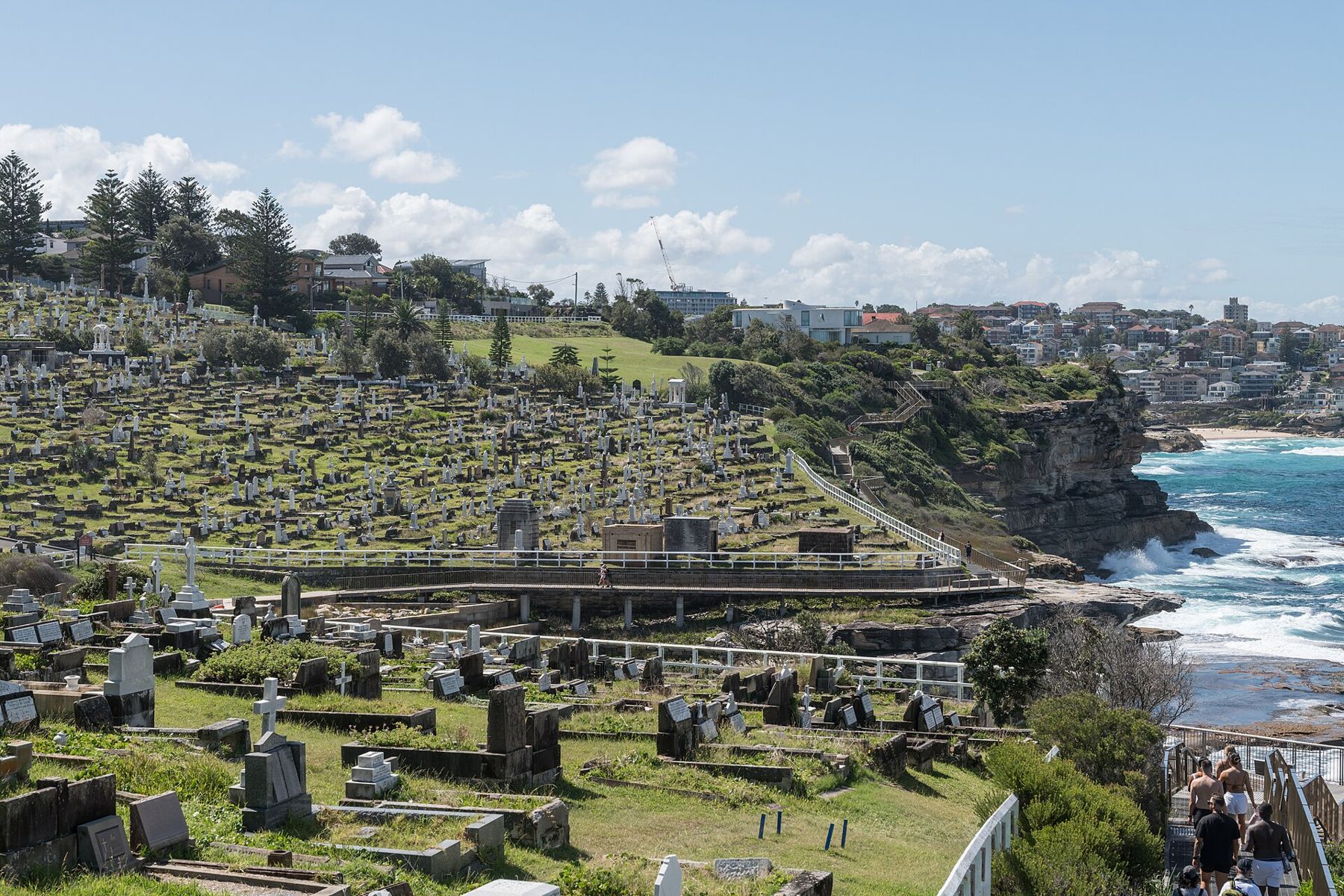
On a calm day, every pool along the route is open and inviting; in a big sea, the pools close and the walk becomes a spectacle of spray instead.Lane 9 · ClovellyClovelly's concrete bay and Gordons Bay
Clovelly, Gordons Bay and Coogee
Beyond the cemetery the path passes through streets for a stretch before dropping down to Clovelly. Here a long, narrow inlet has been lined with concrete platforms, making a sheltered saltwater channel that feels more like a pool than a beach. On a calm day it is full of snorkellers and slow lap swimmers, and the fish come right up to the edges.
Clovelly also has a small ocean pool at the mouth of the inlet, and the big blue gropers that cruise the inlet are protected: watch them, but do not feed or touch them.
Next comes Gordons Bay, a small, rocky bay with fishing boats pulled up on the shore and deep, clear water. There is no sand to speak of, and no lifeguards, but it is a favourite with experienced snorkellers and divers. A boardwalk carries the path around its edge.
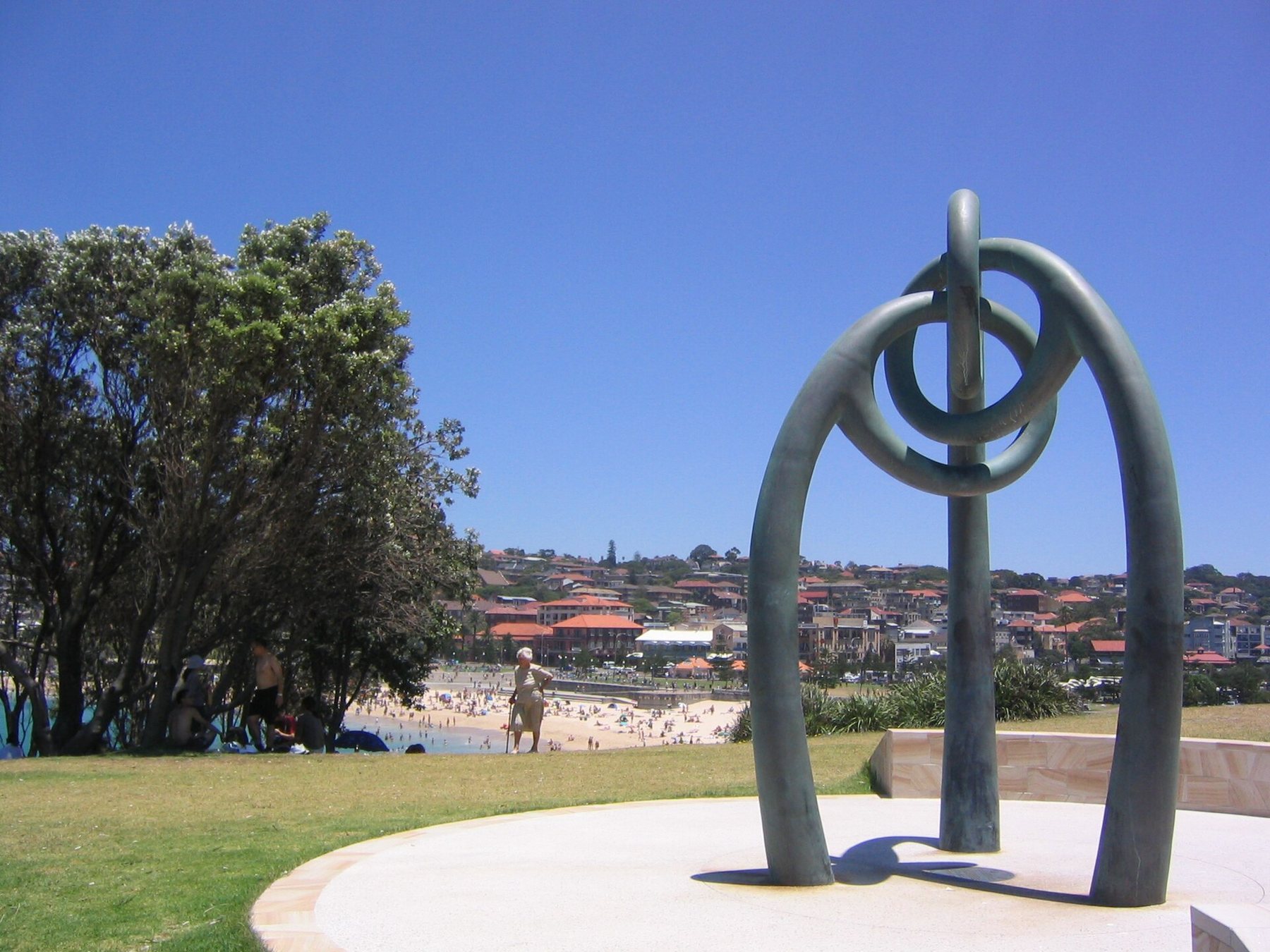
The last headland brings you to Dolphin Point, above the northern end of Coogee Beach. A sculpture here commemorates the victims of the 2002 Bali bombings, among them members of a local sporting club. Below it, Coogee spreads out in a wide crescent of sand, with Giles Baths at the northern end and more pools further south. The story on the Coogee pools covers them all, and the timber-decked tidal pool at Wylie's Baths is a short walk beyond.
Heat, shade and timing
The walk is exposed for most of its length. There is shade in Bronte Park and under the trees at Clovelly and Coogee, but very little on the headlands, and the sandstone throws back the heat on a summer afternoon. In the hotter months, start early, carry more water than you think you need, and wear a hat. Drinking fountains and toilets exist at most of the beaches, but do not rely on finding one exactly when you want it.
Autumn and spring are the best seasons. The air is mild, the water is still pleasant, and from late autumn into spring you may see whales passing offshore. Winter mornings are clear and calm, and the regular winter swimmers keep the pools busy at dawn.
The path has many steps, some steep, and it is not suitable for prams or wheelchairs along its full length. Parts are closed from time to time for repairs after storms, with detours through the streets; check before you go if you are planning a long day.
Bus out, ferry home
Buses run to Bondi Beach from the city and from Bondi Junction station, and buses run back from Coogee to the city and to the junction. Routes change from time to time, so check the current timetables before you go. Since you finish somewhere different from where you start, a car is more trouble than help, and parking near both beaches is scarce and expensive on fine days.
If you walk the other way, from Coogee to Bondi, you finish on the busiest beach in Sydney with plenty of buses home. Either direction works. What matters most is the swell. On a calm day, every pool along the route is open and inviting; in a big sea, the pools close and the walk becomes a spectacle of spray instead.
Neighbouring lanes
Inside the heads, the swell fades and the swimming changes. Shark nets, timber boardwalks and old tidal baths turn harbour coves into flat, green-blue pools with sand underfoot.
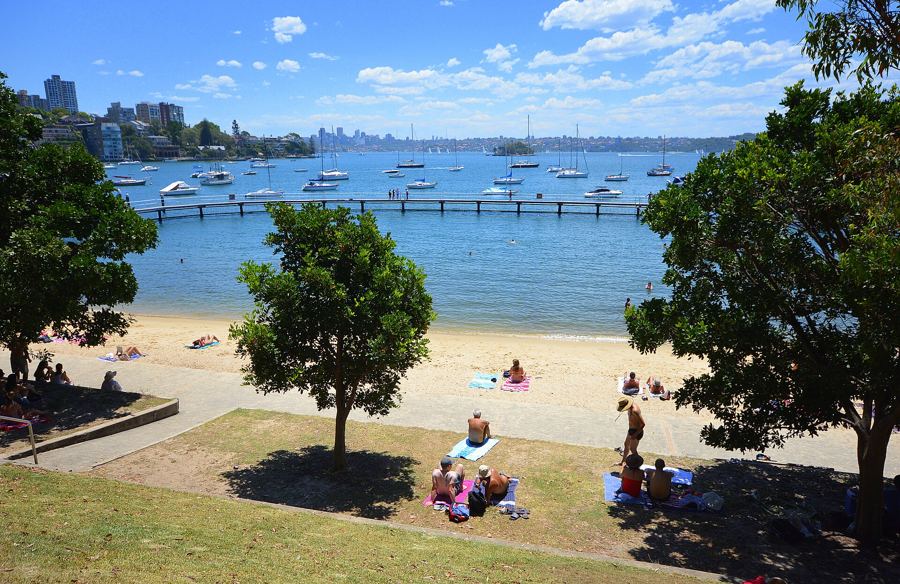
From the Spit Bridge to Manly, a bush track wanders round the northern shore of the harbour for about ten kilometres, past sandy coves, sandstone headlands, ancient engravings and a small harbour pool.