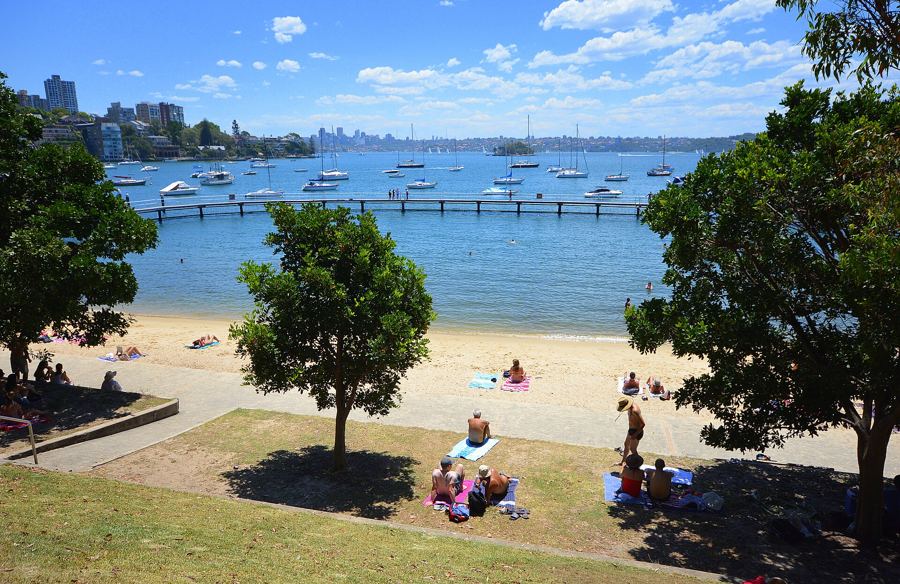
The end of the line: pools along the Esplanade
The train stops a few minutes' walk from the sand at Cronulla. From there a seaside path links a chain of ocean pools, rock shelves and grassy parks all the way to the mouth of Port Hacking.
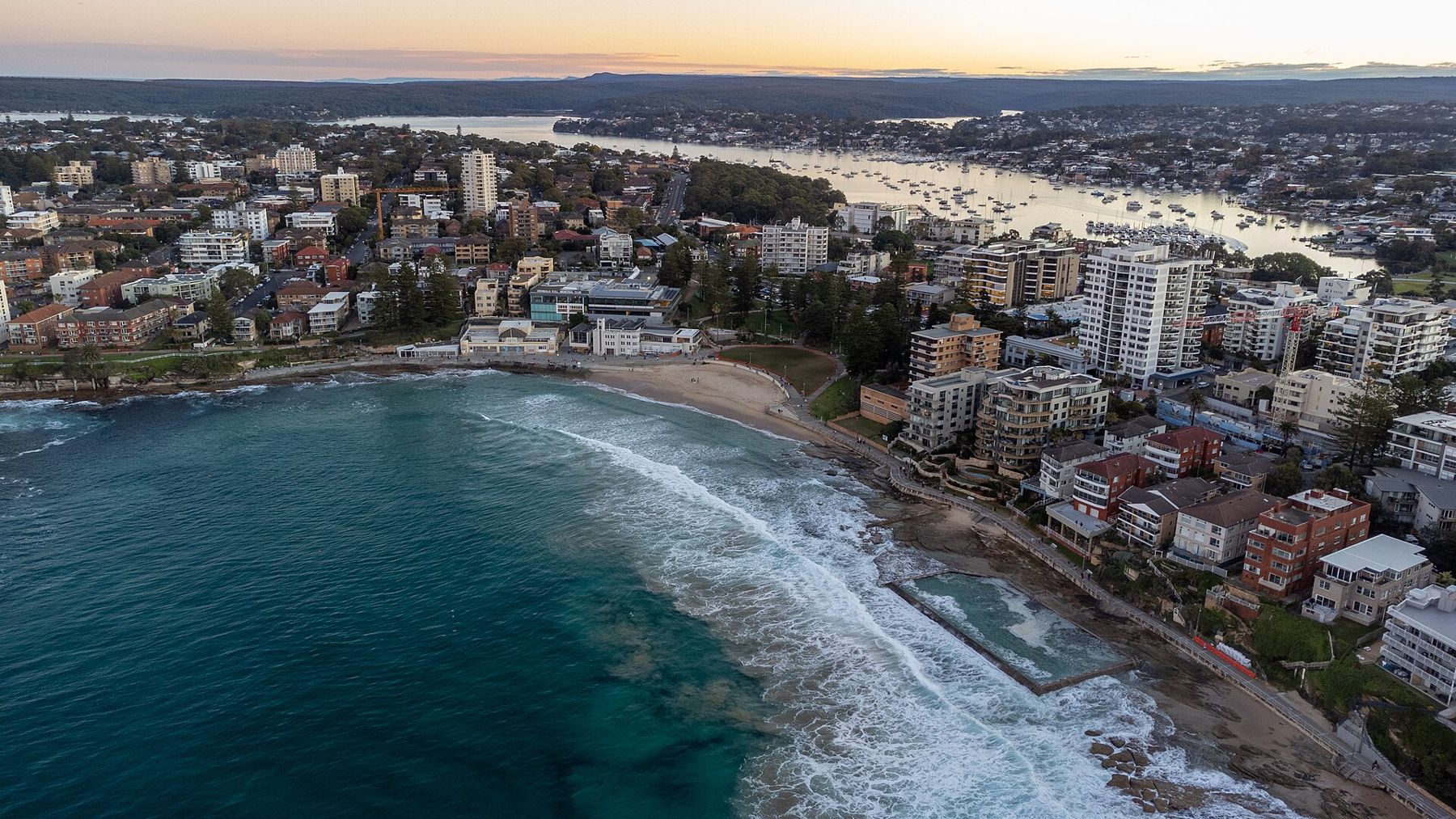
Most of Sydney's ocean pools need a bus, a ferry or a long walk from the nearest station. Cronulla is the exception. The railway line runs out of track a short stroll from the beach, and from the platform you can be in sea water within a quarter of an hour, towel still dry, ticket still in your pocket.
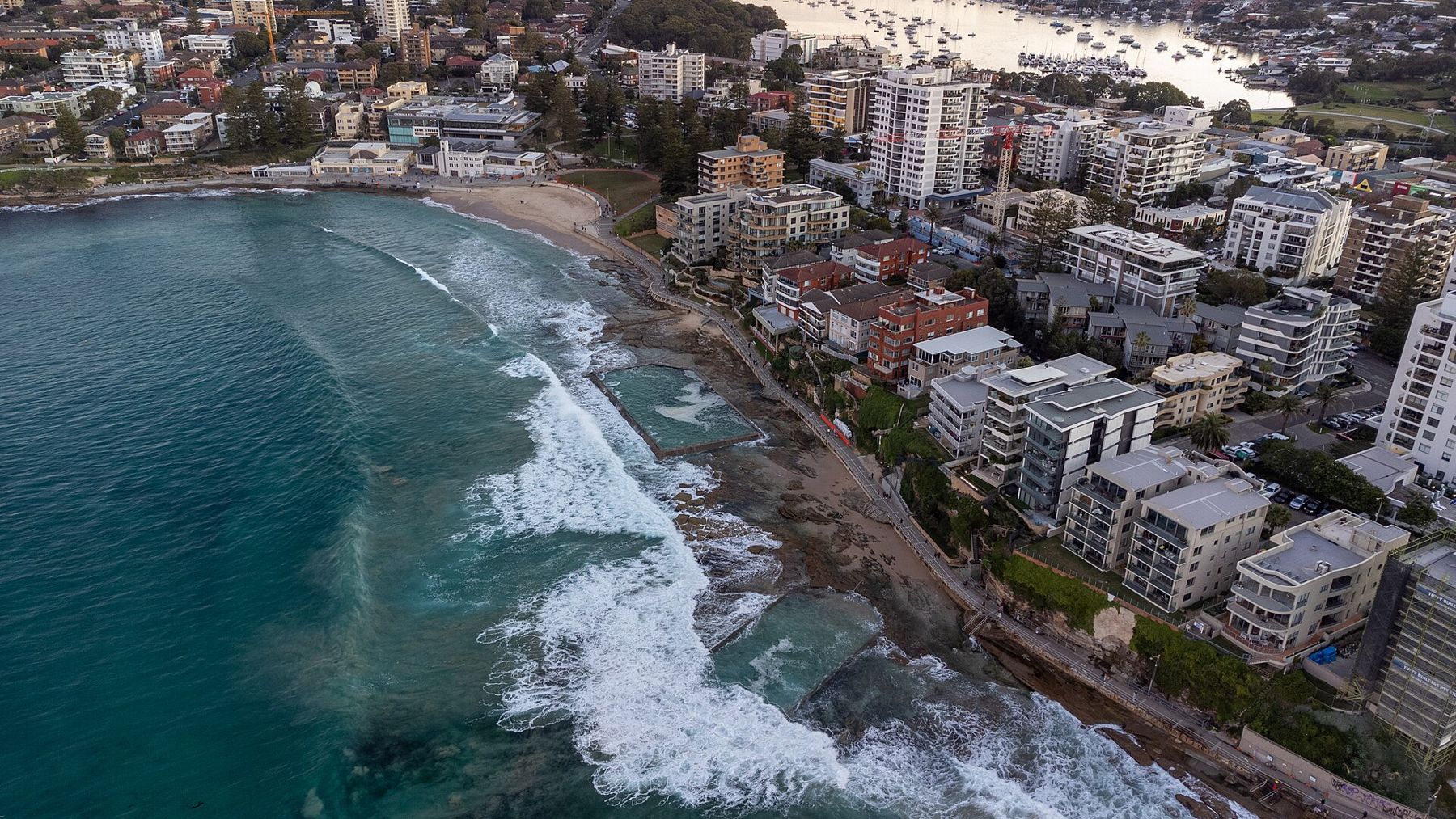
What waits at the bottom of the hill is not one pool but a string of them. A paved path called the Esplanade follows the shore south from North Cronulla, past rock shelves and small coves, to the point where Port Hacking meets the sea. Along the way it passes ocean pools at North Cronulla, at the southern end of Cronulla Beach, at Shelly Beach and at Oak Park. You can swim in one, walk ten minutes, and swim in the next.
This is Dharawal Country, and the beaches, headlands and bays of the Sutherland Shire have been fished and walked for many thousands of years. The suburb you see today, with its apartment towers and Norfolk Island pines, is a very recent layer on a very old coast.
Off the train and down to the sand
Cronulla is the last stop on its branch of the suburban rail network, and trains run through the day from the city and from the Illawarra line. The journey from the centre takes about an hour, a little more or less depending on the service and where you change. Timetables and track work change, so check before you go, especially at weekends.
From the station, the shopping streets slope gently down to the beach. Turn left for North Cronulla and the long sweep of sand running north towards Kurnell, or right for the southern pools and the Esplanade. Either way, it is a few minutes on foot. There is no need to drive, which is just as well: parking near the water fills early on warm days.
Four pools on one path
The pools along this stretch are council pools and free to use. Each is a concrete wall set across a rock platform, filled by the sea at high tide and in any decent swell, then drained and scrubbed on a regular cycle. They are not identical, and part of the pleasure of a day here is finding the one that suits the conditions.
North Cronulla
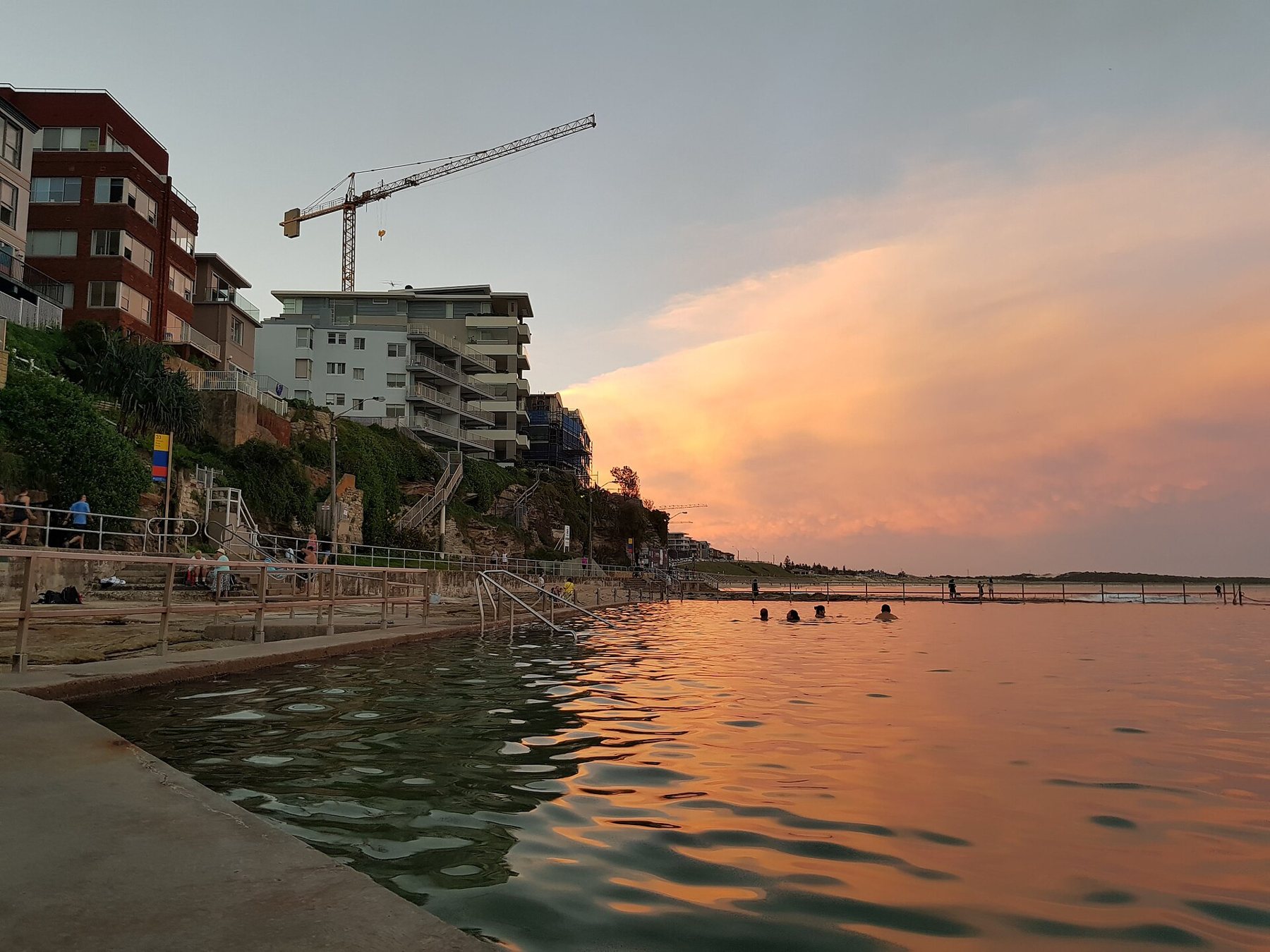
The pool at North Cronulla sits at the southern end of that beach, right beside the promenade. It is the busiest of the group, a place for steady laps early in the morning and for families later on. At dusk, with the sky colouring over the water and the lights coming on in the flats above, it is a fine place to finish a day.
South Cronulla
Below the cliffs at the far end of Cronulla Beach, the Esplanade passes two pools set into the rock shelf, one long and one smaller. From above, the two read like grey rectangles laid against the surf. In a south-easterly swell the waves pile against the seaward wall and pour over in sheets, and this is where you most often see the pool closed or emptied of swimmers.
Shelly Beach
A little further south the path drops to Shelly Beach, a small cove with a grassy park behind it and an ocean pool across the rock shelf in front. The beach is short and sheltered by rocks, and the park makes it the best stop for a picnic and a lie in the shade of the pines.
Oak Park
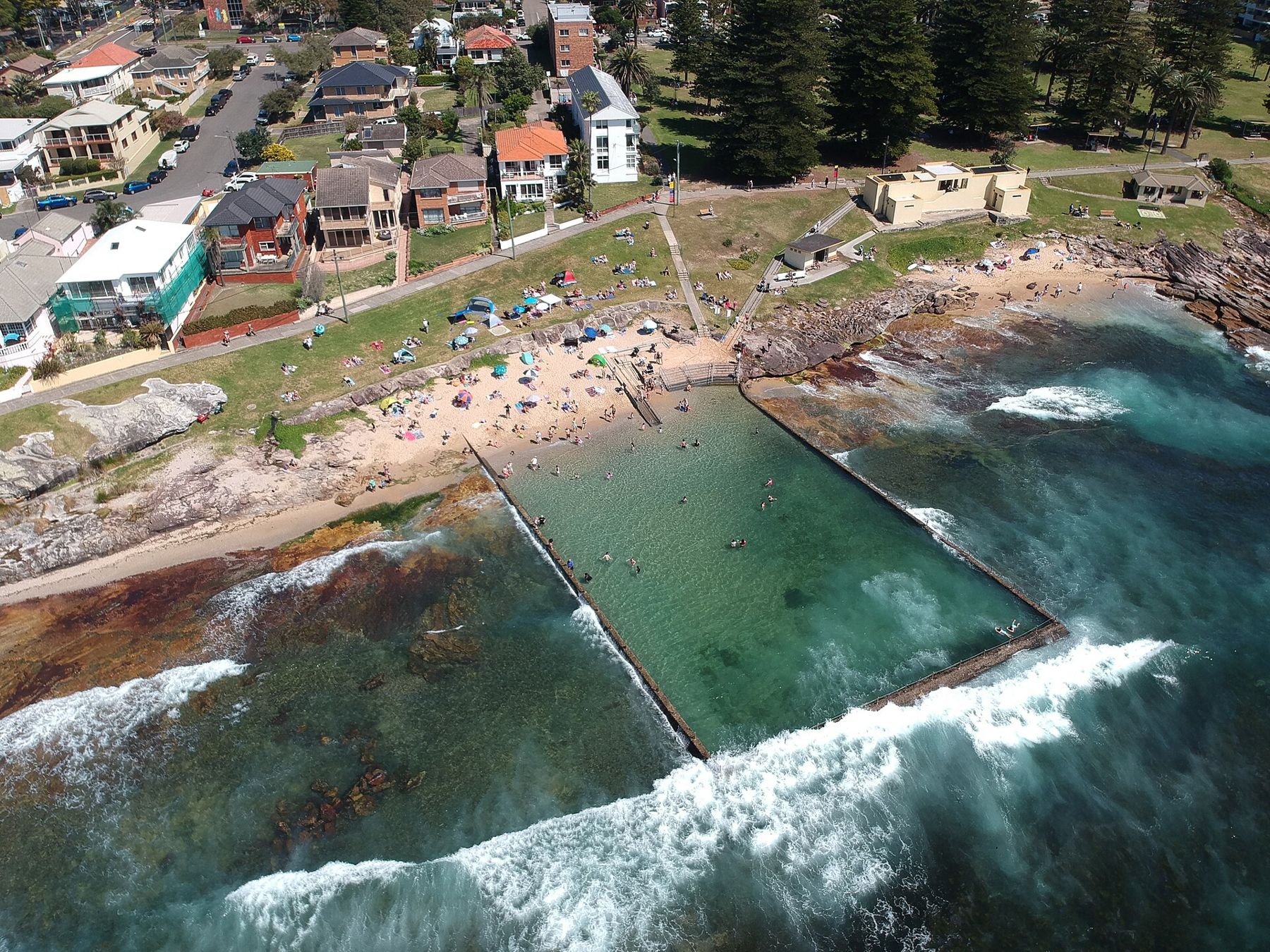
Oak Park, at the southern end of the walk, has a pool tucked against the rocks below another sloping lawn. It tends to be quieter than the pools nearer the station, with more locals than visitors, and makes a good last swim before the walk to the point.
Walking the Esplanade
The Esplanade is a sealed path, flat for most of its length, with steps and ramps where it climbs over headlands or drops to the beaches. From North Cronulla to Bass and Flinders Point is a walk of a few kilometres, an easy hour without stops, and much longer if you swim at every pool along the way.
On one side are apartment blocks and old houses on the cliff edge; on the other, rock shelves full of shallow pools, weed and crabs at low tide. In winter and spring, keep an eye on the sea for the spouts of migrating whales. The rock platforms are tempting to explore, but they are slippery wherever they are wet, and waves can surge across them without warning. Stay well back from the edge when the sea is running.
Lane 10 · MaroubraThe wildest-looking pool on the south coastIf you are walking with children, the path is mostly safe and fenced where it runs high, but there are steps and short unfenced drops. Take water, because the stretch between the beaches has little shade at midday.
Bass and Flinders Point
The walk ends at Bass and Flinders Point, a rocky tip at the mouth of Port Hacking. The name recalls George Bass and Matthew Flinders, the young naval explorers who sailed into Port Hacking in a small open boat in the 1790s. A memorial on the point marks the connection.
From here you look across the river mouth to the bush of the Royal National Park, and back north along Bate Bay to the Kurnell peninsula. The water around the point is deep and the currents in the entrance can be strong, so this is a place for looking rather than swimming. Behind you, on the western side of the peninsula, Gunnamatta Bay is calm and full of moored boats, a complete change from the surf beaches a few hundred metres away.
You can walk back the way you came, or cut inland through the quiet streets to the station, which takes about twenty minutes from the point.
The pools are the calmer choice, not a guaranteed one.
Swell, flags and water quality
Cronulla's beaches face the open ocean, and the surf here can be powerful. If you swim at the beach rather than in a pool, swim between the red and yellow flags, and watch for rips, which are common along this coast. The beaches are patrolled at set times in the warmer months; outside those times and those flags, nobody is watching.
The pools are the calmer choice, not a guaranteed one. In a big swell from the south or south-east, waves break over their seaward walls and wash across the decks. When that happens, watch from the promenade and come back another day. The notes on reading swell and tide explain how to judge this before you set out.
The pools close for cleaning, usually once a week, and after storms. Cleaning days differ between pools, so check before you go if you have your heart set on one. After heavy rain, water near stormwater outlets can be polluted for a day or more; look at the state's beach water quality reports and wait if they advise against swimming.
A day at the southern end
- Arrive early on summer weekends, when the trains and beaches fill.
- Start at North Cronulla and work south, so the walk ends at the point.
- Bring reef shoes for the rock shelves and the pool steps.
- Pack a hat and sunscreen: the Esplanade is exposed for long stretches.
- In late summer the water is at its warmest, the best time for a pool crawl.
Cronulla makes a good companion to the eastern suburbs pools. If you like the idea of linking several swims with a coastal path, try the walk from Bondi to Coogee, and read up on the seasons of the ocean pools before you plan a winter dip.
Neighbouring lanes
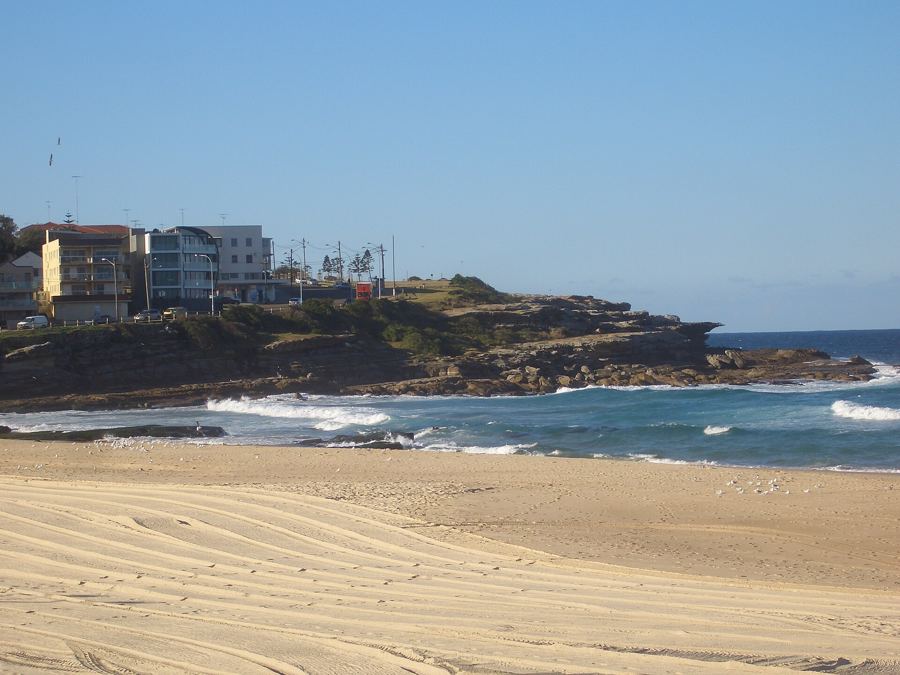
Mahon Pool sits in a gap in the rock shelf north of Maroubra Beach, filled by the sea and fringed by reef. On a calm weekday at mid-tide it feels like a pool somebody forgot to finish.
Inside the heads, the swell fades and the swimming changes. Shark nets, timber boardwalks and old tidal baths turn harbour coves into flat, green-blue pools with sand underfoot.