The ocean-pool year
Sydney's ocean pools never close for winter, but they change with every season. Warm water and crowds in summer, glassy mornings in autumn, and a hardy dawn crowd when the sea turns cool.
Ask a Sydney regular when the swimming season starts and you may get a puzzled look. For many, it never stops. The ocean pools stay open through the winter, the regulars keep turning up at dawn, and the water, while cool, rarely gets truly cold by the standards of more southern coasts. What changes through the year is the light, the crowd, the wind and the creatures that drift in with it.
This is a rough guide to how the year runs. Treat the numbers as general patterns, not promises: the sea has its own ideas, and one warm current or a week of southerly winds can shift things noticeably.
Summer: warm water and full decks
From December to February, the pools are at their busiest. The school holidays run from just before Christmas to late January, and on hot weekends the decks and beaches fill from mid-morning. The water warms steadily through the season, usually into the low twenties in degrees Celsius, and keeps warming into autumn.
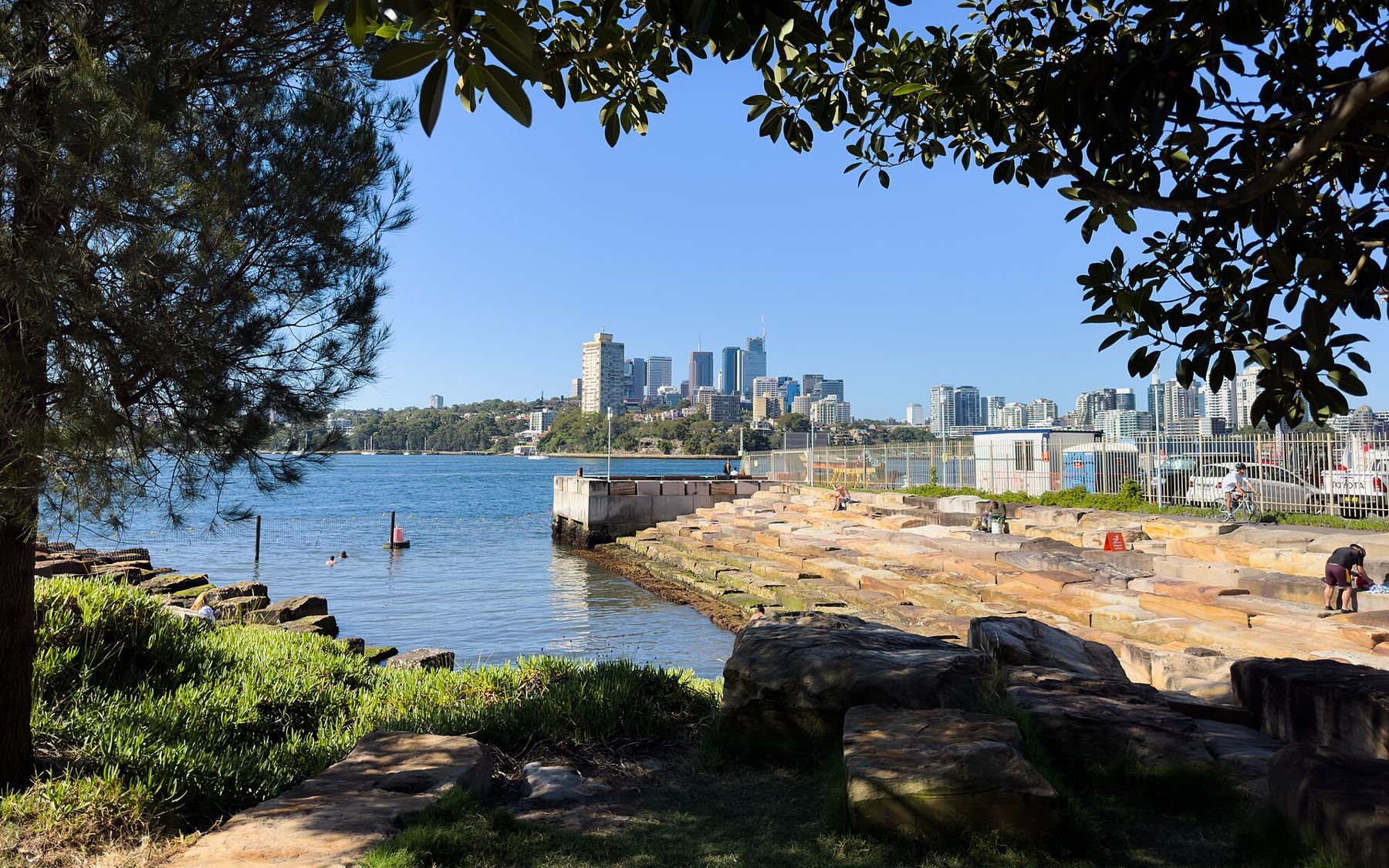
Summer afternoons often bring a north-easterly sea breeze, which can chop up the water and push weed and debris into the pools. Early mornings are calmer and quieter, and many swimmers do their laps before the breeze arrives. On the hottest days, the harbour has its own swimming spots too, such as Marrinawi Cove at Barangaroo Reserve, where sandstone steps lead down into calm water a short walk from the city offices. Thunderstorms are common late in the day, and they bring lightning and heavy rain; get out of the water at the first sign of either.
Bluebottles on the north-easterlies
Those same north-easterly winds sometimes bring bluebottles, small floating relatives of jellyfish with a blue gas-filled float and long trailing tentacles. They drift with the wind, so after a day or two of steady onshore breeze you may find them washed up along the tide line or floating in the pools.
A sting is painful but rarely dangerous for most people. If you are stung, leave the water, pick off any tentacles with your fingers (they do not usually sting through the skin of your fingertips, but rinse your hands afterwards), rinse the area with sea water, and soak it in water as hot as you can comfortably bear. Lifeguards can help, and anyone who has trouble breathing or a strong reaction needs urgent medical help. Do not touch bluebottles on the sand, because they can still sting.
Lane 15 · SydneyReading swell and tide before you swimAutumn: the best of the year
From late February to April, many regulars think the pools are at their finest. The sea is at its warmest, the holiday crowds have gone, and the north-easterly breezes ease, which means more glassy mornings. Daylight saving ends in early April, giving you lighter mornings for an early swim.
Autumn is also a good season for longer coastal walks, with milder heat and the water still inviting. The walk from Bondi to Coogee is at its best now, with a swim at each end and a few in between.
Winter: cool, clear and quiet
By July and August, the water has dropped to the high teens. That feels cold at first, but many people find it bracing rather than painful, and the clarity of the water on a still winter morning can be remarkable. The pools are quiet through the middle of the day, and in the early mornings they belong to the regulars.
Those regulars include Sydney's winter swimming clubs, some of them very old, which hold races and swims every week through the cooler months. The best known is based at the pool on the rocks at Bondi, covered in the story on Bondi Icebergs, but many other pools have their own groups. They are a friendly sight on a grey morning, and a reminder that the cold is mostly in the mind.
Winter also brings the big southerly swells. Pools on south-facing coasts close more often, and waves over the walls become common. From late autumn to spring, keep an eye out to sea for whales migrating along the coast.
Spring: wind and warming water
Spring, from September to November, is often windy and changeable. The water is at its coolest in early spring, then starts to warm towards summer. Daylight saving returns in early October, bringing long evenings for an after-work dip. Late spring sunshine can be surprisingly fierce, even when the air feels mild.
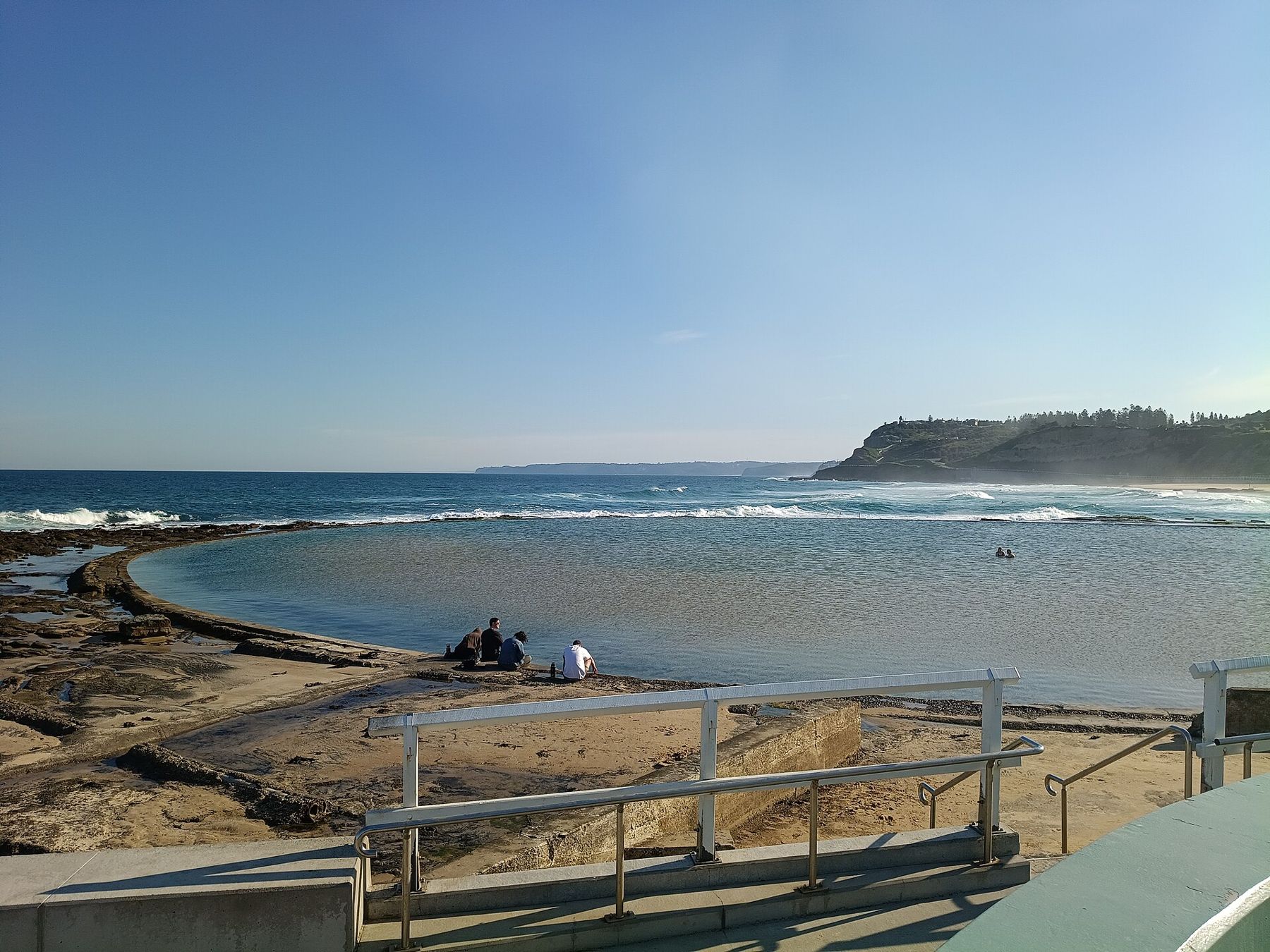
The habit of ocean pools runs right along the New South Wales coast, from the Illawarra to Newcastle and beyond. If a spring trip takes you up or down the coast, the old ocean baths in those towns make a fine comparison with Sydney's own.
Cleaning days and the sun
Whatever the season, the pools close regularly for cleaning, usually once a week, when they are drained and scrubbed. Each pool has its own day, and these change, so check before you go if you are heading to a particular one.
The Australian sun is strong all year. In summer, the UV level is high from early morning to late afternoon, and it can burn in minutes. Even in winter, the midday sun on bare concrete and rock is stronger than many visitors expect. Wear a hat, a shirt and sunscreen, and look for shade under the trees and cliffs. Most pool decks have none at all.
A year at a glance
- Summer: warmest air, busiest pools, bluebottles and storms.
- Autumn: warmest water, fewer crowds, calmer mornings.
- Winter: cool, clear water, big southerly swells, winter clubs.
- Spring: windy, cooling then warming, long evenings after daylight saving.
For somewhere to start, a calm autumn morning at the pools along the Cronulla Esplanade is hard to beat.
Neighbouring lanes
The same rock pool can be a glassy lap lane one morning and a churning wash of white water the next. A few minutes with the forecast tells you which you will find.
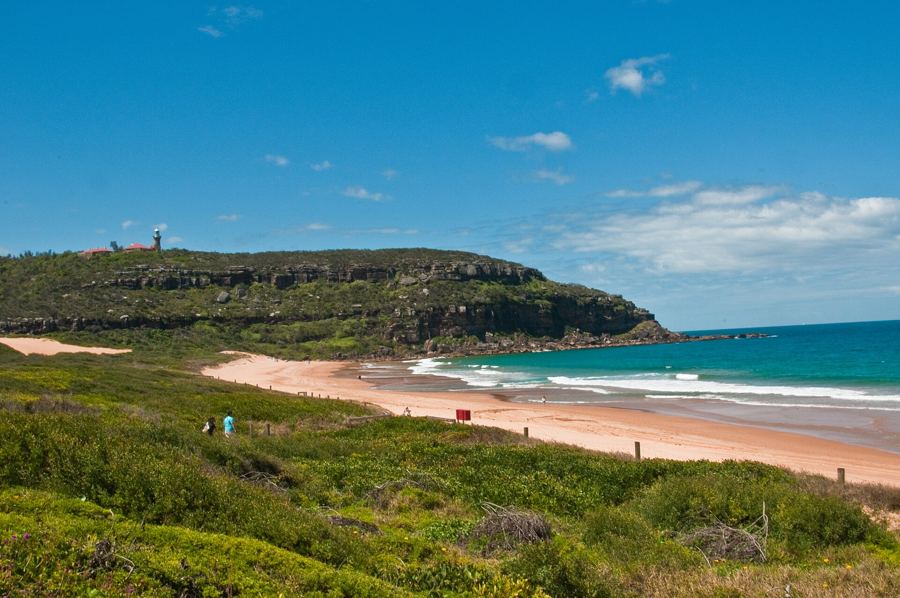
Palm Beach is as far north as Sydney goes. Swim in the rock pool at its southern end, walk the length of the sand, then climb to the sandstone lighthouse on Barrenjoey Head.