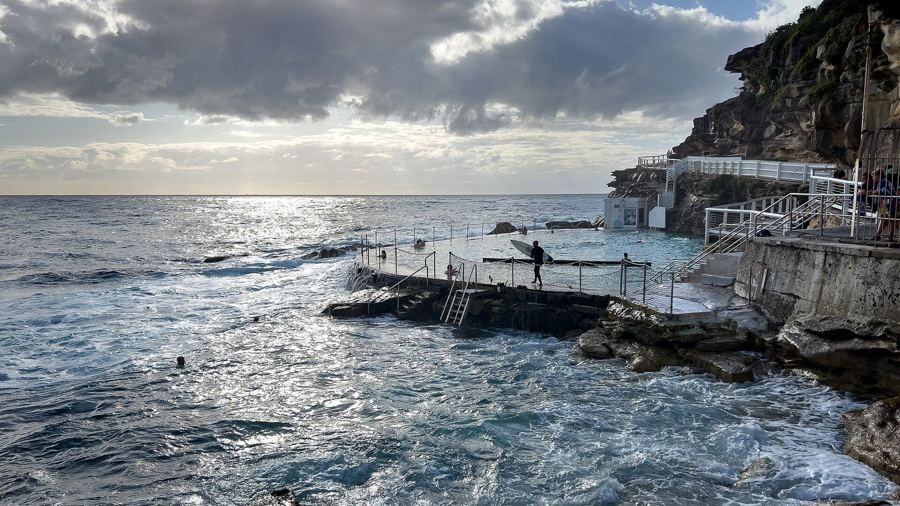
Laps above the surf at Bondi's south end
At the southern end of Bondi, a 50-metre pool sits on the rocks so close to the surf that waves break over its lane ropes. It is Sydney's most photographed pool, and still a good one to swim in.
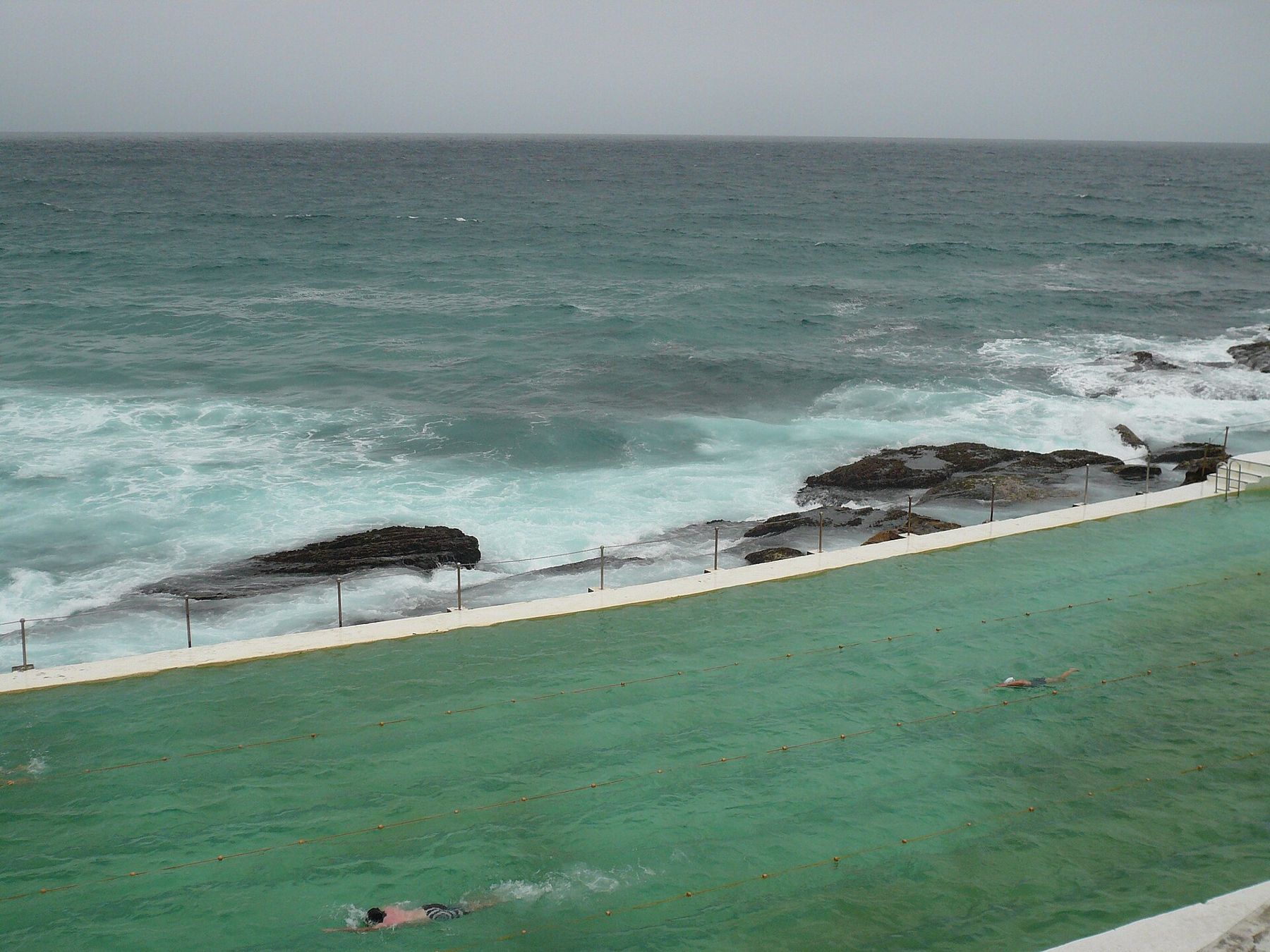
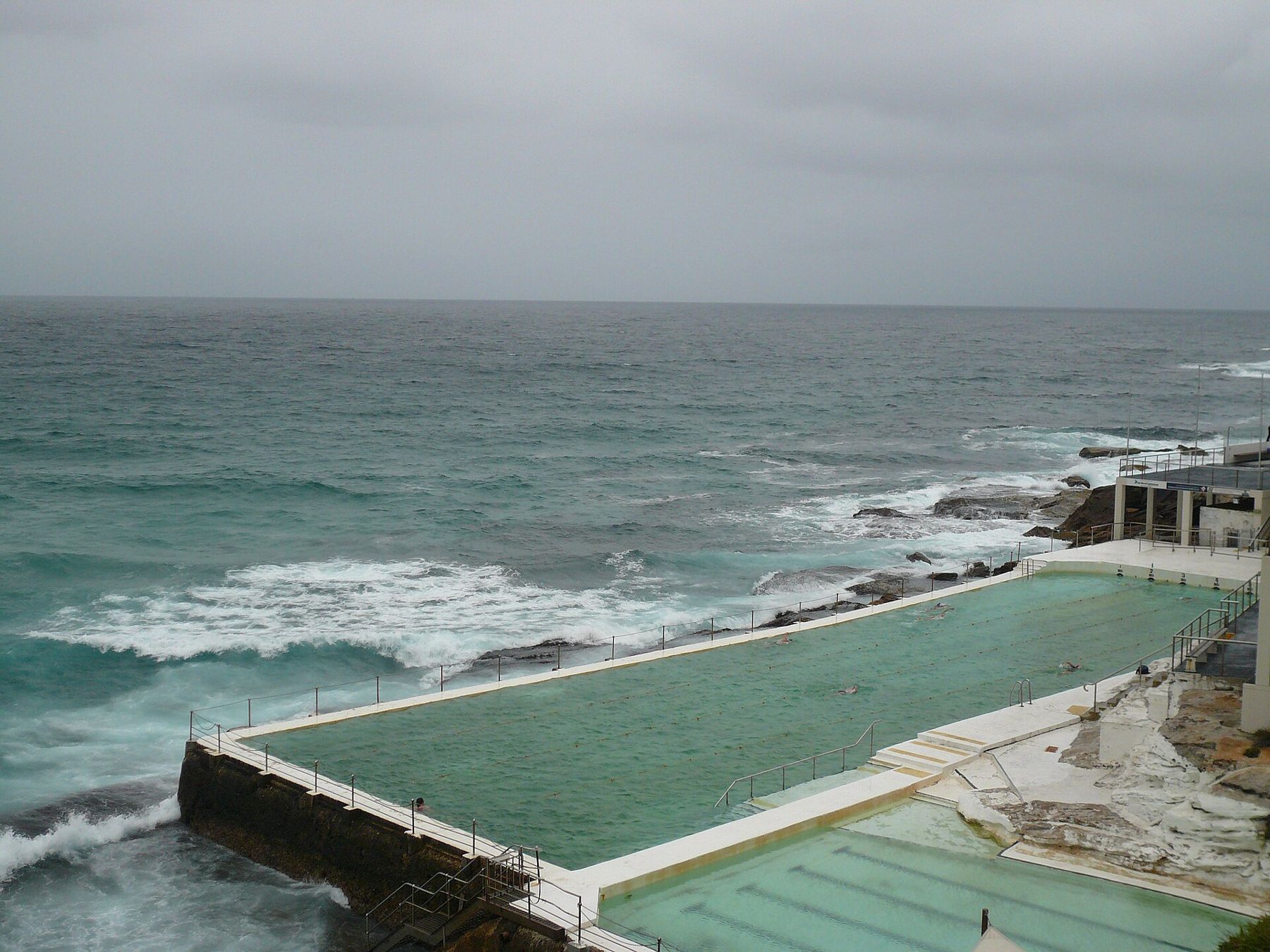
Stand on the cliff path at the southern end of Bondi on a morning when the swell is up and you will see it: a long rectangle of green water laid along the rocks, swimmers ploughing up and down the lanes, and every so often a wave rolling over the seaward wall and pouring into the pool. Bondi Icebergs, officially part of the Bondi Baths, is the most famous ocean pool in Australia. It is also a working pool, with lane ropes, early-morning regulars and a winter swimming club that has been plunging into it for nearly a century.
Fifty metres on the rocks
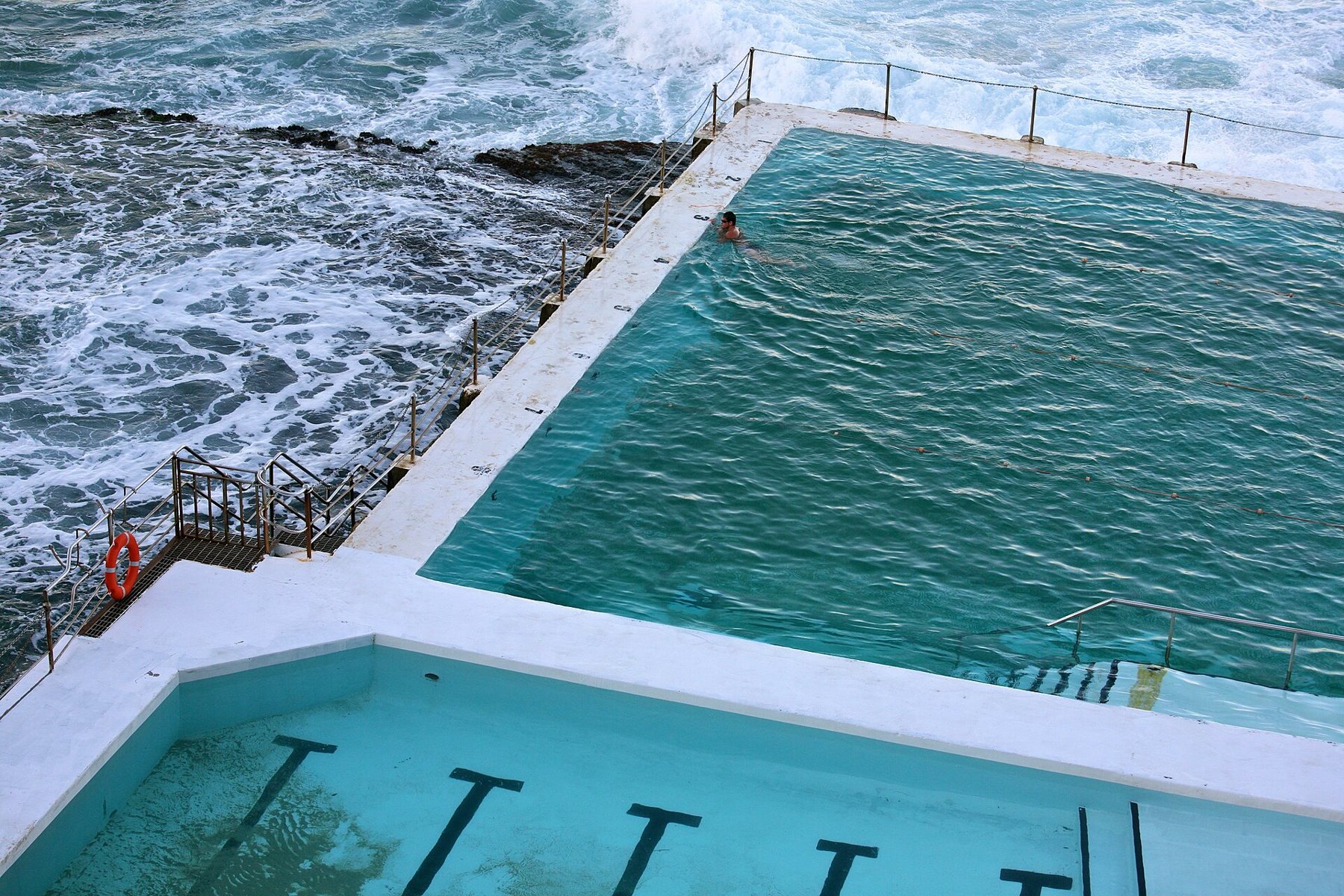
The main pool is 50 metres long, with eight lanes marked on its floor, and is filled with seawater. Beside it, on the landward side, is a much shallower children's pool, also filled with seawater, where small swimmers can splash without being knocked about by the surge. Steps with rails lead down into both.
Unlike most of Sydney's ocean pools, this one charges for entry. The fee gives you use of the pool, the change rooms and showers in the building above it. Entry charges and opening times shift from season to season; look them up on the day.
The water is the ocean's water, refreshed by the waves. It is clear and green on a calm day, and its temperature follows the sea: mild in late summer and autumn, cold in winter and early spring.
Lanes are usually set aside for different speeds, with slower swimmers closer to the steps and faster swimmers out towards the sea. Look at the signs on the deck before you choose one, and keep to the left when you share. If you are not a confident swimmer, the end near the steps is shallower and calmer, but the pool is deep enough over most of its length that you need to be able to swim it comfortably.
Bring goggles, because the water moves more than in an indoor pool and a mouthful of salt water is the usual price of looking up. In the cooler months, a warm layer for afterwards matters more than you might expect: the wind off the sea chills wet skin quickly, even on a sunny day.
The winter swimming club
The pool's nickname comes from its winter swimming club, founded in 1929 by a group of local lifesavers who wanted to keep fit through the cold months. The club's members swim through winter, and the club's traditions, including competitive swims on winter Sunday mornings, are part of Bondi's character. Photographs of members breaking blocks of ice into the pool for a midwinter swim have been printed around the world.
You do not need to join a club to swim here. The public pays at the door and swims alongside the regulars. If you are visiting on a winter Sunday morning, expect the lanes to be busy with club events, and give them room.
Bondi Beach from the south end
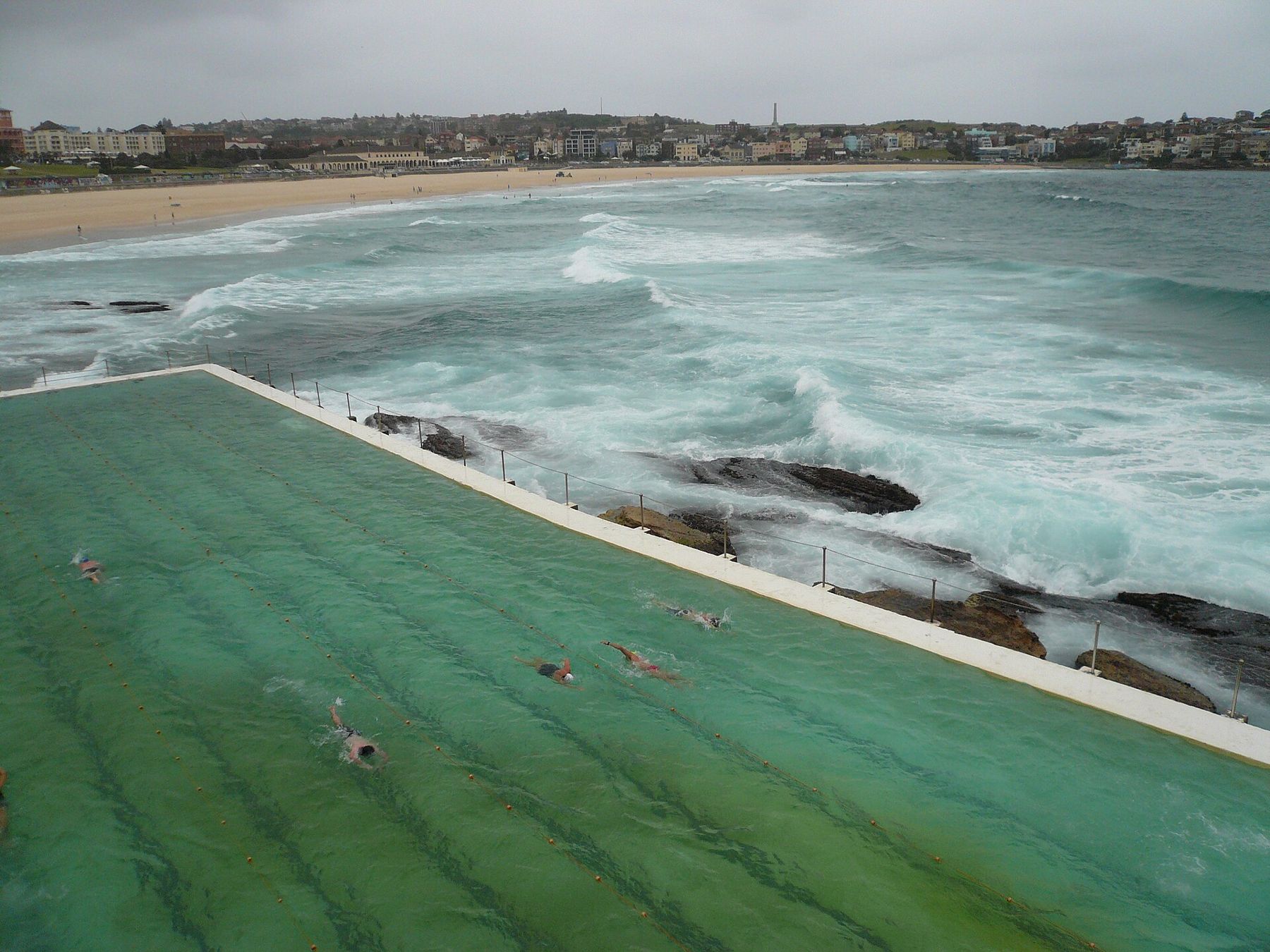
The pool sits at the southern end of Bondi Beach, the long crescent of sand that has become a symbol of Sydney. From the pool deck you look straight along the beach to the northern headland, past the surfers, the lifeguard tower and the old pavilion behind the sand.
The beach itself is patrolled all year, with lifeguards on duty daily and red and yellow flags marking the safest place to swim. Rips are common, including a well-known one near the southern end, close to the pool. If you swim in the surf, swim between the flags, and if you are caught in a rip, float, raise an arm and wait for help rather than fighting the current.
This stretch of coast is Aboriginal Country, the land of the Gadigal and Bidjigal peoples, and the sandstone headlands at either end of the beach hold rock engravings and other places of meaning that long predate the pool, the promenade and the suburb behind them.
On a hot summer weekend the beach and the promenade are crowded from early morning. The pool is less crowded than the sand, but it fills too, and a weekday morning is the time to swim with space in your lane.
Lane 13 · Bondi to CoogeeBondi to Coogee on foot, pool to poolWhen the sea climbs the wall
What makes the pool spectacular also makes it hazardous. In a big swell, especially from the east or south-east, waves break over the seaward wall and sweep across the lanes. A strong set can push swimmers against the walls or knock them off their feet in the shallow end. Staff on duty decide when it is safe to swim, and they close the pool when it is not.
The pool also closes on its regular cleaning day each week, when it is drained and scrubbed. The cleaning day and opening hours are published by the pool; check before you go so that you are not left looking at an empty concrete basin.
Even on calmer days, stay well back from the seaward edge of the deck and off the rocks below it. The rock shelf is slippery and exposed, and waves can arrive without warning.
On a rough day the deck above the pool is one of the best places on the coast to watch the sea. Find a spot well back from the edge, and you can see the sets build beyond the rocks and break across the wall below you, while the lifeguards on the beach keep swimmers out of the worst of it.
What makes the pool spectacular also makes it hazardous.
Getting to the south end
The simplest route is by train to Bondi Junction and then by bus down to the beach. Buses run frequently and take around fifteen minutes, longer in summer traffic. Buses also run from the city centre. Check current routes and timetables before you go.
From the bus stops on Campbell Parade, walk to the southern end of the beach and up the steps on Notts Avenue. The pool entrance is on the cliff above the water. Parking in Bondi is scarce and expensive in summer, so the bus is almost always easier.
Walking on from the pool
The pool also marks the start of the famous coastal walk south. From the end of Notts Avenue, the path runs along the cliffs past Mackenzies Bay and Tamarama to Bronte, then on past Waverley Cemetery to Clovelly and Coogee. The full route is described in the story on the Bondi to Coogee walk.
A shorter morning works well: swim at Icebergs, then walk the half hour to Bronte for a second, free swim at Bronte Baths under the cliffs. In summer, go early; the path is exposed and hot by late morning. For a quieter ocean pool with fish to look at, continue down the coast to Coogee and Wylie's Baths.
In late spring, when Sculpture by the Sea is held on the cliffs between Bondi and Tamarama, the path is crowded and slow. The exhibition is worth seeing, but swim before you walk.
Neighbouring lanes
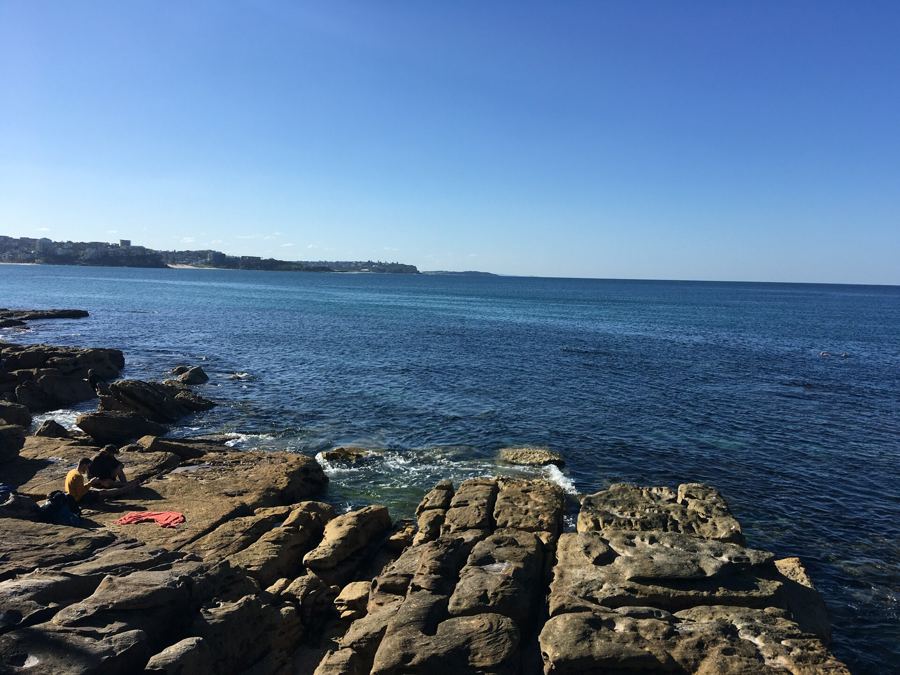
Ten minutes' walk from the crowds of Manly's surf beach, a small triangular pool and a west-facing cove sit inside a marine reserve. Bring goggles: the fish are part of the swim.
Bronte's ocean pool sits at the foot of the southern cliffs, free to use and full of families, lap swimmers and winter regulars. Next door, a natural rock pool and a green gully complete the day.