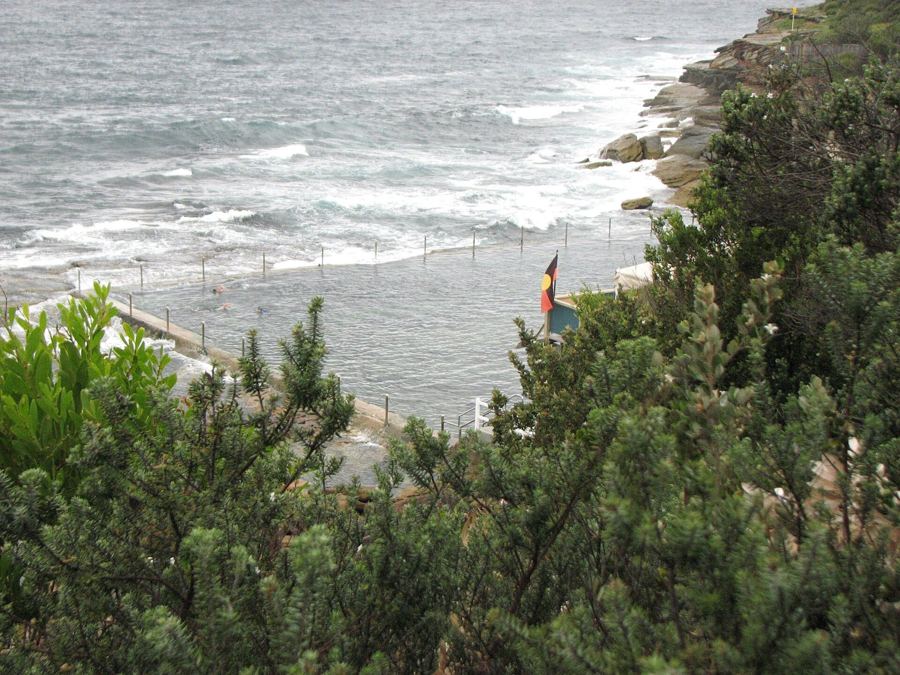
The family pool under the Bronte cliffs
Bronte's ocean pool sits at the foot of the southern cliffs, free to use and full of families, lap swimmers and winter regulars. Next door, a natural rock pool and a green gully complete the day.
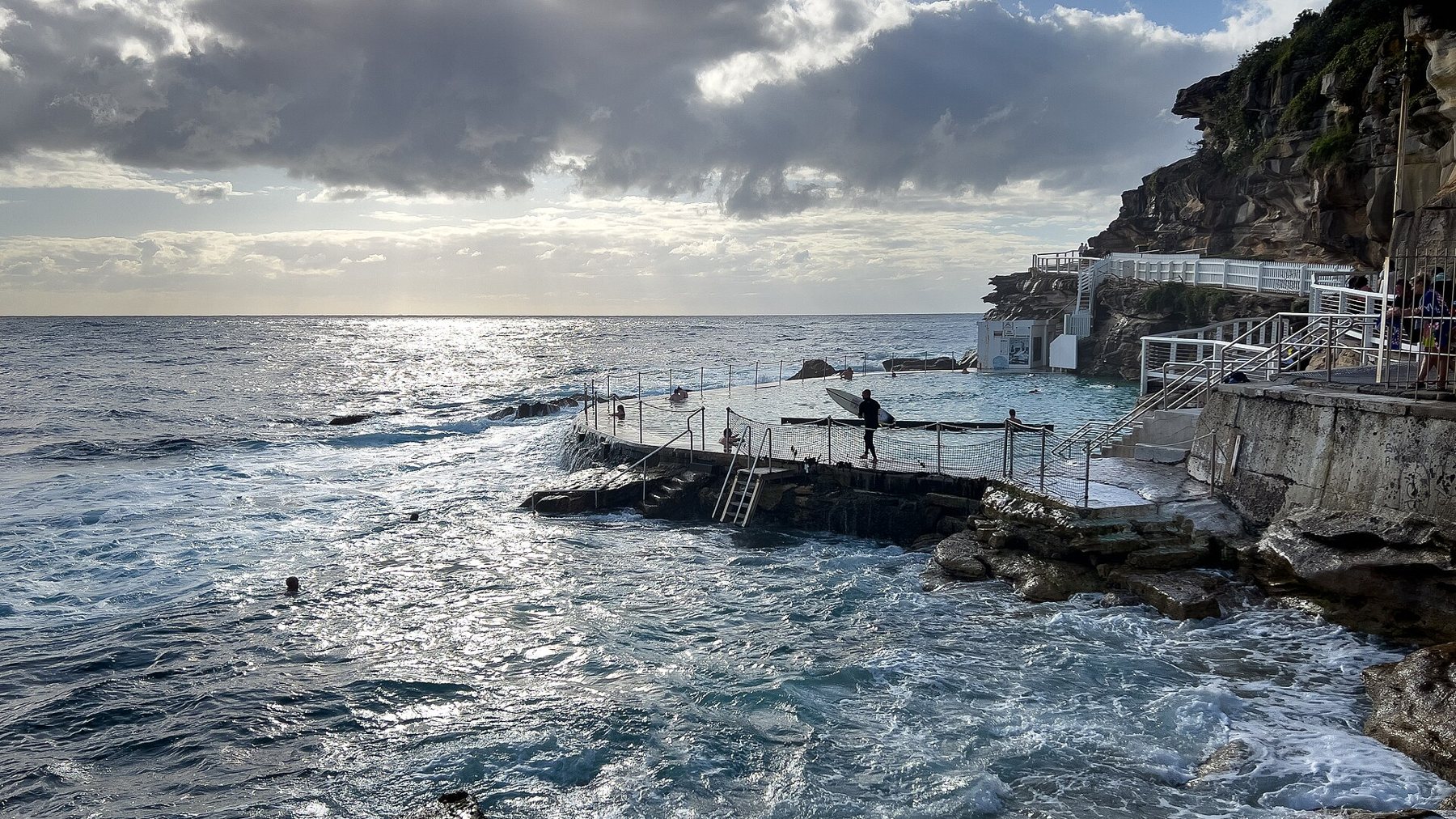
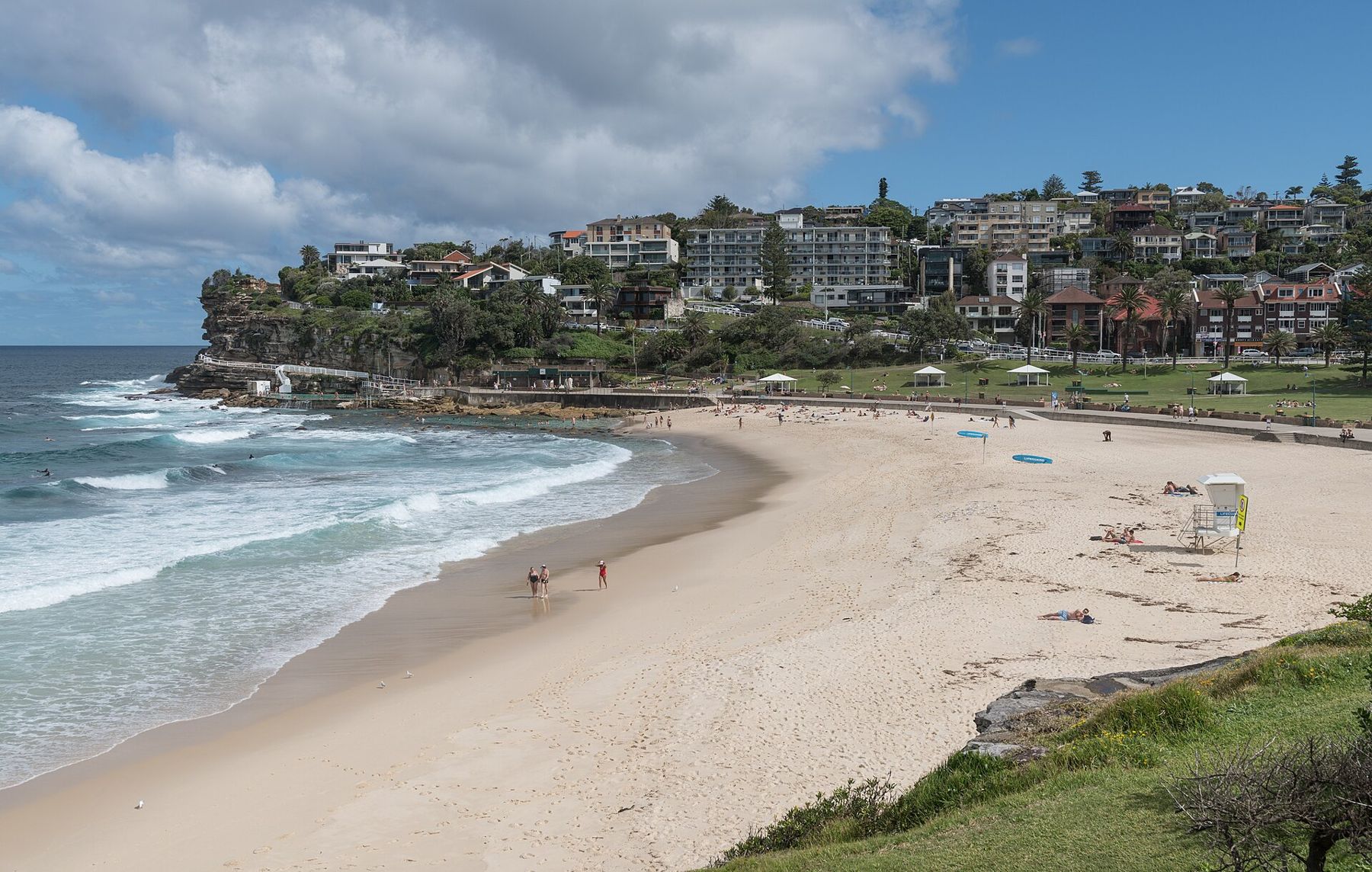
Bronte is the beach Sydney families choose when Bondi is too much. It is short and steep, tucked into a valley between sandstone headlands, with a broad green park behind it and, at its southern end, an ocean pool built into the rocks at the foot of the cliffs. Bronte Baths has been there since the late nineteenth century. It is free, open all year, and on a summer morning it holds every kind of swimmer the city produces: children in rash vests, older swimmers in caps doing slow, steady laps, and teenagers daring each other to sit on the wall when a wave comes over.
The coastal walk from Bondi passes directly above the pool, so plenty of people see it from the railing without ever getting in. Go down the steps instead.
The pool at the foot of the cliff
Bronte Baths is a rectangular sea-filled pool, roughly 30 metres long, with a concrete wall on its seaward side and the cliff rising behind its southern end. Steps lead down from the path to the deck, where there is room to leave a towel, and the change rooms and toilets sit at the beach end.
The water comes from the sea, washed in over the wall at high tide and in any swell, and it is clear and green on a calm day. A timber boom runs across part of the pool, marking off a shallower area that suits younger swimmers. The lap lanes are informal, so share with a little give and take, and keep to the left when the pool is busy.
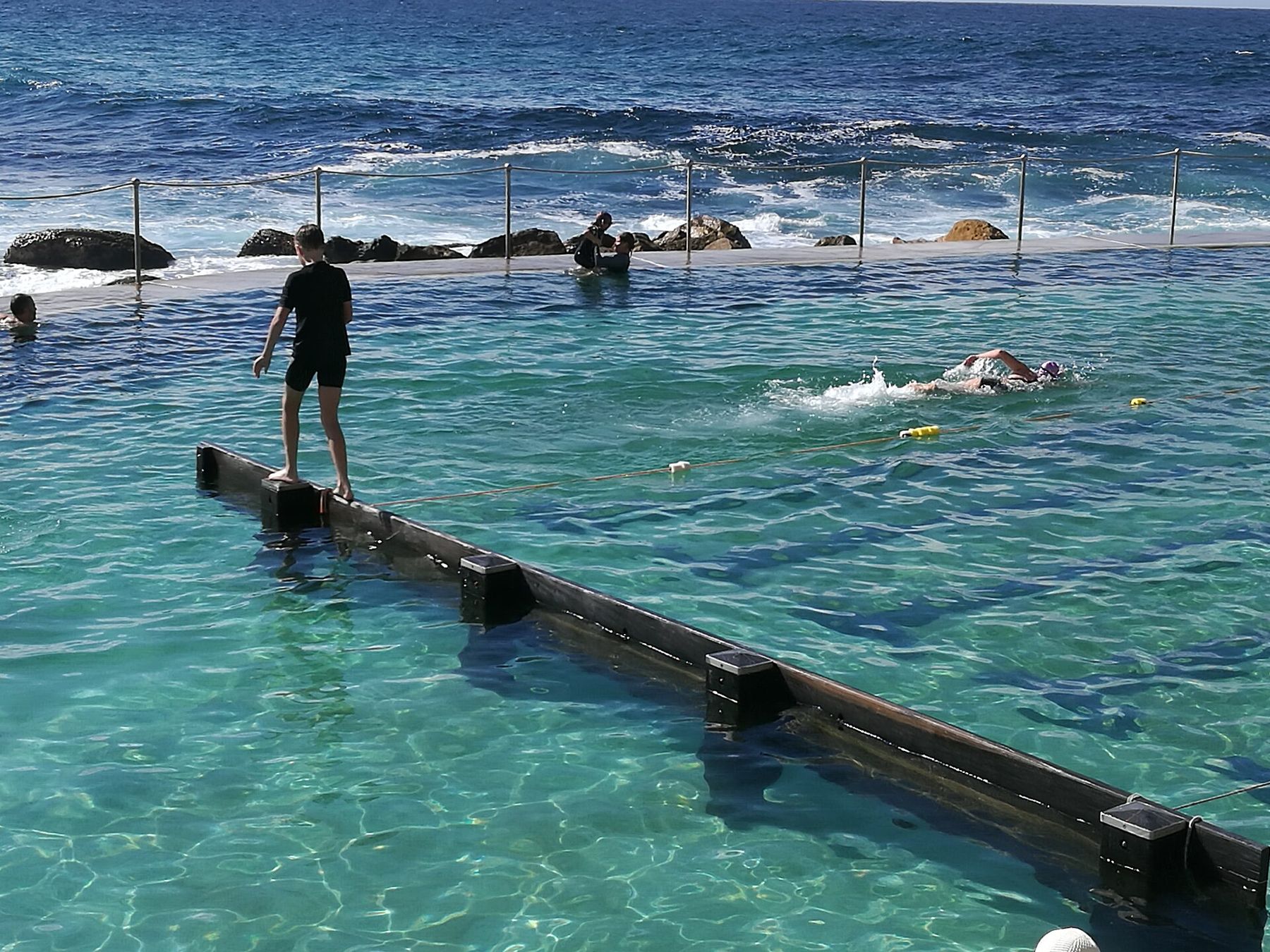
Because the baths are free and close to a big park, they are busiest on summer weekends and during the school holidays. Early mornings belong to the regulars, who swim through winter in cold, clear water. Late afternoons in autumn, when the sun has left the beach but the water is still warm, are often the quietest time of all.
Cleaning days and wild seas
Like all of Sydney's ocean pools, Bronte Baths is drained and scrubbed on a regular cycle, usually once a week, and it is closed while that happens. It also closes when the seas are dangerous. The cleaning day and any closures are posted by the council; check before you go if you are making the trip just for the pool.
When a big easterly or south-easterly swell is running, waves break over the seaward wall and surge across the pool. A strong wave can knock you over in the shallows or push you against the wall. If water is pouring over the wall, stay out. The rock shelf around the pool is slippery, and it is no place to stand and watch in a big sea.
If water is pouring over the wall, stay out.
The guide to reading swell and tide explains how to judge the conditions before you set off, which is worth doing for Bronte in particular, since the pool faces the open ocean with very little shelter.
The Bogey Hole
Just north of the baths, at the southern end of the sand, a line of rocks shelters a natural rock pool known as the Bogey Hole. There is no concrete wall here: the pool is formed by the rock shelf itself and by boulders that break the force of the waves. At low tide on a calm day it is a sheltered, shallow lagoon where small children paddle and older ones peer at fish and crabs among the weed.
At high tide or in any swell, the Bogey Hole changes quickly. Waves break over the outer rocks and the water inside surges and drains. The bottom is uneven, with sharp rock and slippery weed, so reef shoes are a good idea, and children need an adult close by. Take nothing from it, and turn any rocks you lift back the way you found them.
Lane 13 · Bondi to CoogeeBondi to Coogee on foot, pool to pool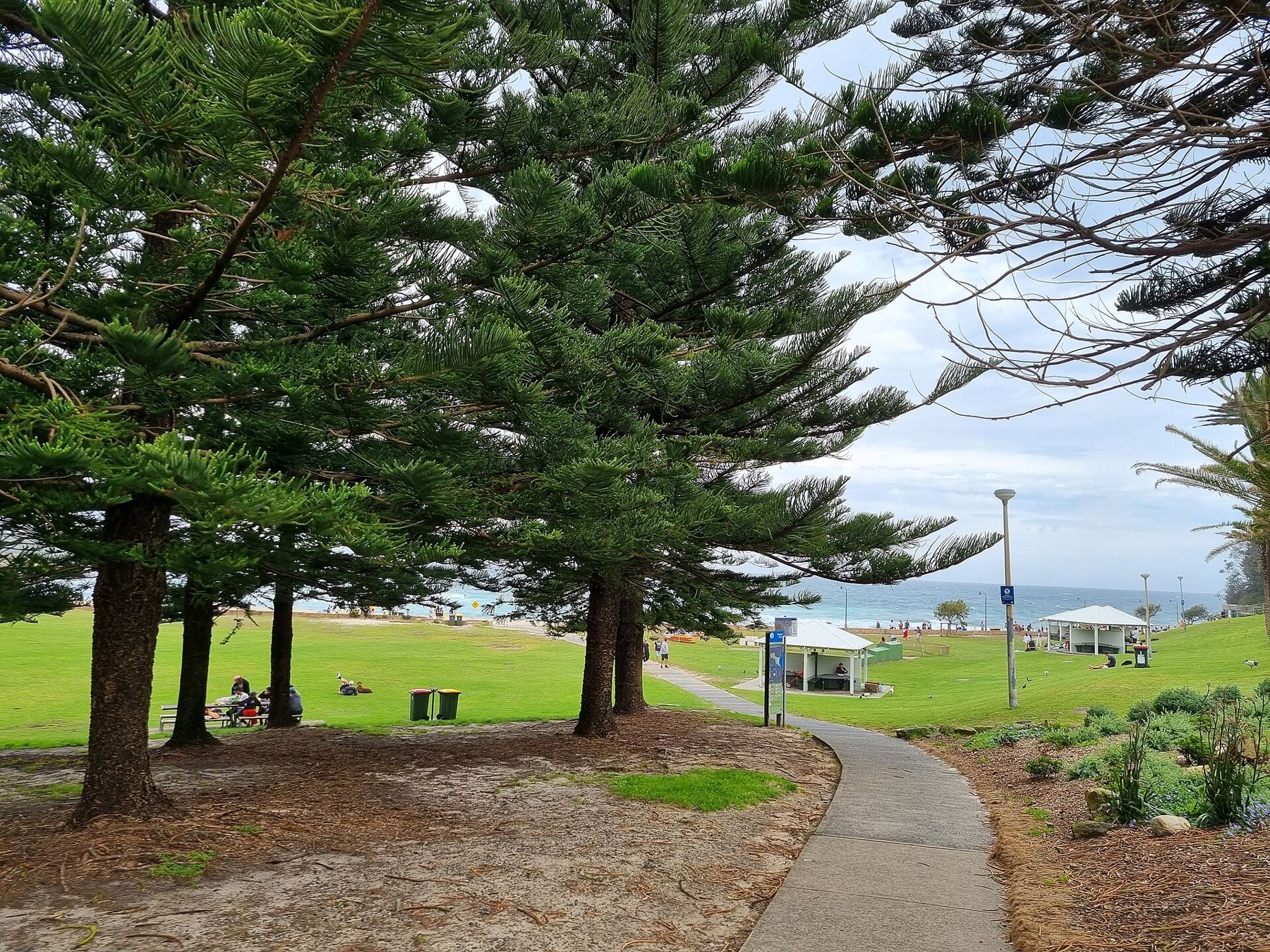
Bronte Park and the gully
Behind the beach, Bronte Park fills the floor of the valley with grass, shady trees, picnic shelters and barbecues. On summer weekends it is a great communal picnic ground, with groups claiming shelters early in the morning. It is a good place to spend the middle of a hot day, out of the sun, between a morning swim and an afternoon one.
At the back of the park, a path leads into the gully, where a creek runs down between sandstone walls and bush to a small waterfall. It is a cool, green contrast to the bright beach, and a reminder that the whole of this coast was once bush. The land here is Aboriginal Country, the land of the Gadigal and Bidjigal peoples, whose connection to the headlands, gullies and waters of this coast continues today.
The rip off Bronte Beach
Bronte Beach looks small and friendly, but it is one of the more dangerous surf beaches in the eastern suburbs. A strong rip often runs near the southern end of the beach, close to the rocks and the baths, and the waves break heavily on the steep sand. Local swimmers know it well, and lifeguards spend much of their day keeping people away from it.
If you swim in the surf here, swim only between the red and yellow flags, and only when the beach is patrolled. If you are caught in a rip, stay calm, float and raise an arm for help rather than trying to swim straight back against the current. If you are not a strong surf swimmer, the baths are the better choice on all but the calmest days.
Arriving by bus, leaving on foot
Buses run to Bronte from Bondi Junction, which is served by trains from the city, and the trip from the station takes around a quarter of an hour. Check the current routes and timetables before you go. Parking near the beach is limited and fills early in summer.
Bronte also sits in the middle of the coastal walk. From Bondi, the path runs south past Tamarama and reaches Bronte in about half an hour; you can start with a swim at Bondi Icebergs and finish with a free one here. Walking south, the path climbs past Waverley Cemetery and on to Clovelly, where the long concrete inlet makes a calm swim and a good snorkel, described in the story on Clovelly and Gordons Bay.
In summer, walk early and carry water. The path has little shade, and the sandstone throws the heat back at you by late morning. After heavy rain, check the state's beach water quality reports before you swim; run-off from the streets and the gully can reach the water close to the beach.
Neighbouring lanes
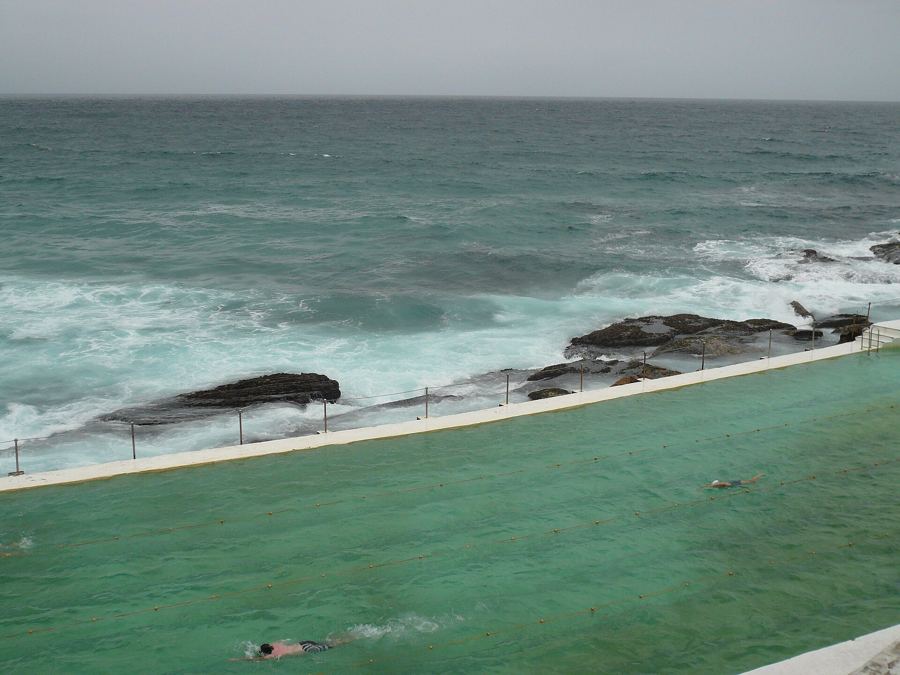
At the southern end of Bondi, a 50-metre pool sits on the rocks so close to the surf that waves break over its lane ropes. It is Sydney's most photographed pool, and still a good one to swim in.
South of Coogee Beach, a timber deck hangs above a rock pool that the sea fills and empties with every tide. Put your face in the water and the pool turns into a reef.