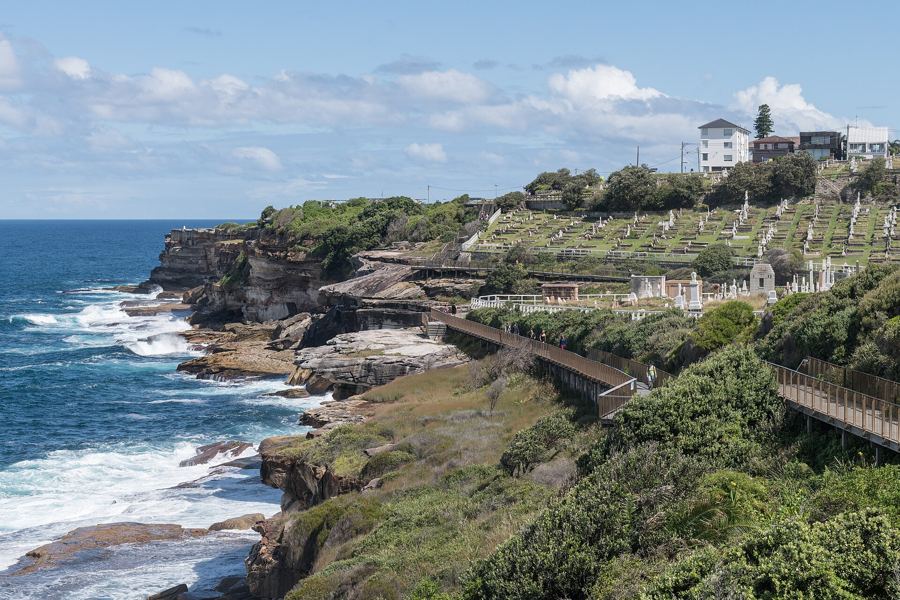
Netted pools and harbour baths
Inside the heads, the swell fades and the swimming changes. Shark nets, timber boardwalks and old tidal baths turn harbour coves into flat, green-blue pools with sand underfoot.
The ocean pools of Sydney's coast are built against the surf. The harbour pools are a different idea. Behind the heads there is no swell to speak of, only ferry wash and the slap of small waves on sand, and the swimming spots here are bays and coves enclosed by nets, piers and boardwalks. The water is calm, the sand is soft, and on a hot afternoon you share it with families, lap swimmers and the occasional curious fish.
These enclosures began as shark nets, and they still keep larger animals out, though nobody should treat them as a guarantee. Today they are as much about marking a safe swimming area away from boats as anything else. The result is a set of sheltered places to swim within a short trip of the city.
Murray Rose Pool at Double Bay
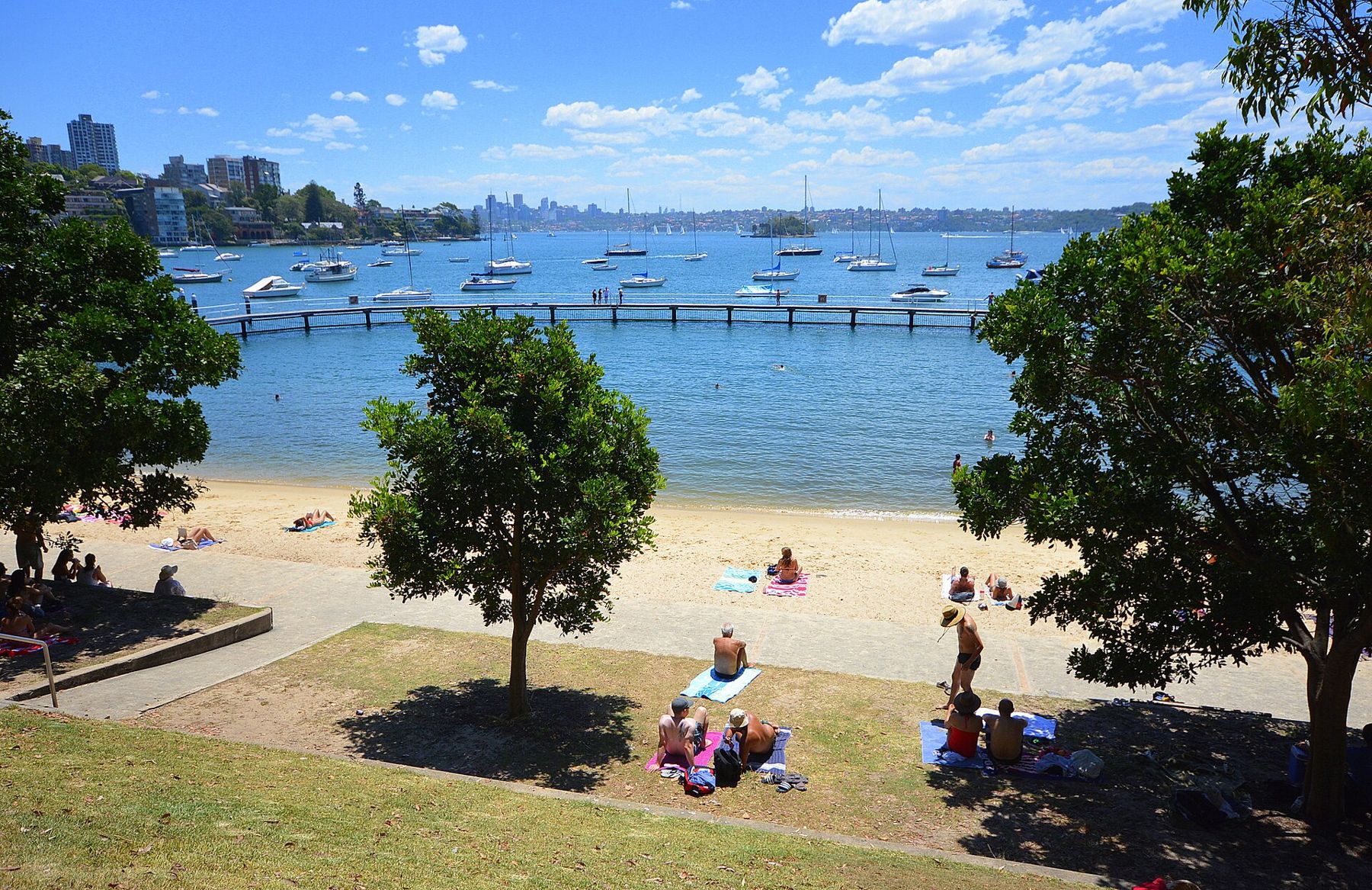
Below the gardens of a harbourside estate at Double Bay, a curved timber boardwalk encloses a small beach and a stretch of harbour. This is Murray Rose Pool, long known as Redleaf Pool and renamed in honour of the Olympic swimming champion Murray Rose. The boardwalk is the pool's best feature: you can walk out along it, sit on the edge with your feet in the water, or swim laps along its inner side.
The beach is narrow and fills quickly on summer weekends. A grassy slope above it offers shade under the trees. Buses run along New South Head Road, and the pool is a short walk downhill from the main road. Swimming is free.
Parsley Bay and Nielsen Park
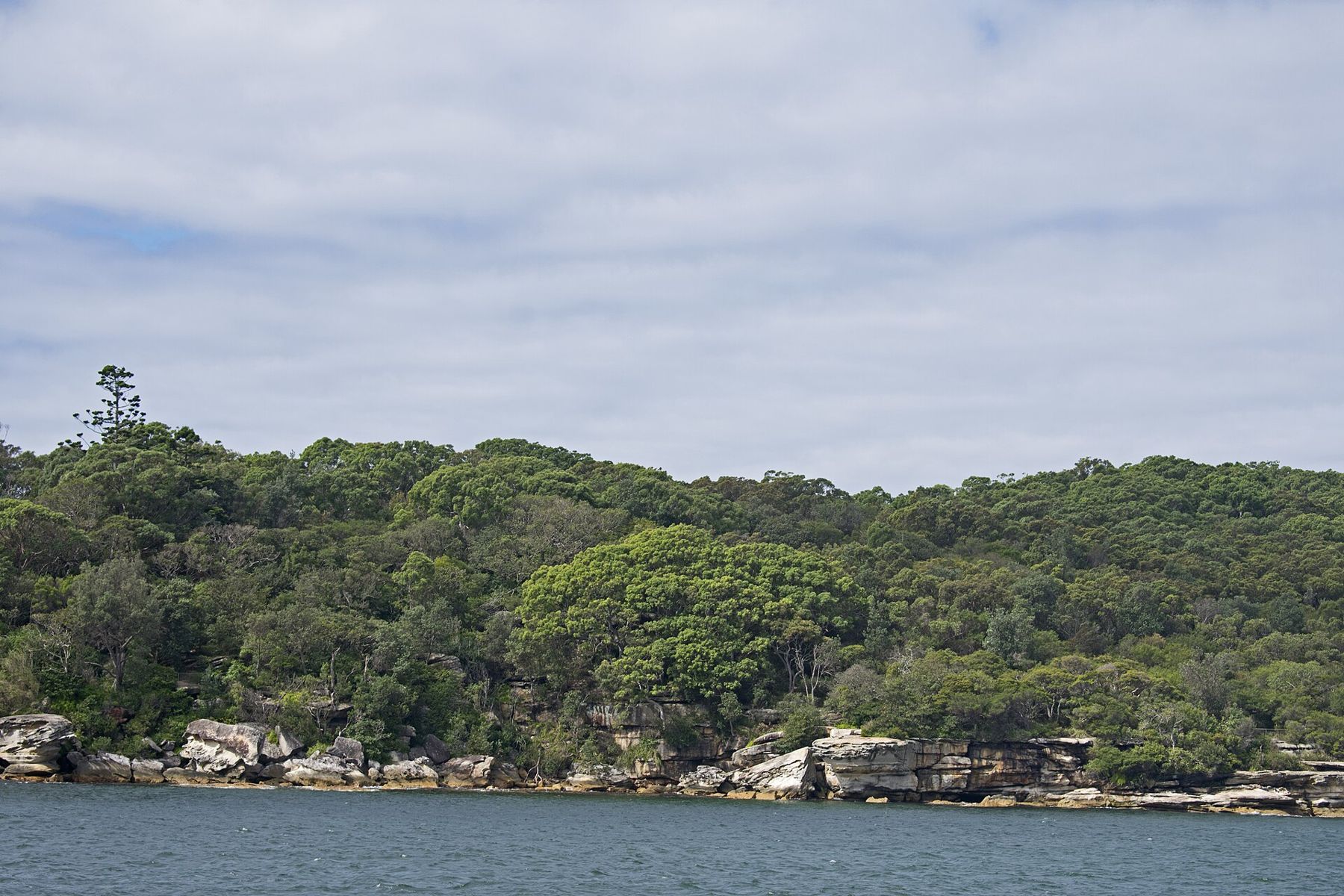
Further out towards the heads, Vaucluse has two of the harbour's loveliest swimming spots. Parsley Bay is a narrow inlet with a netted swimming area, a lawn and a small suspension footbridge across the back of the bay. It is a family place, quiet on weekdays, with bush on both sides of the water.
Nielsen Park, a little further along the shore, is part of Sydney Harbour National Park. Its main beach, often called Shark Beach, is enclosed by a net and backed by big shady trees and a wide lawn. The water is clear on a good day and the beach shelves gently, which makes it one of the best harbour swims for children. The bushland that runs around the headland on either side gives you an easy walk before or after a swim.
Buses from the city and from Bondi Junction stop along the main road above both bays, and the walk down is short but steep. Parking is limited and fills early on hot days.
Lane 4 · ManlyFairy Bower and Shelly Beach, Manly's sheltered sideBalmoral on the north shore
Across the harbour, Balmoral Beach at Mosman faces Middle Harbour and the heads. Along the beach, the Balmoral baths sit inside a netted enclosure with a long timber boardwalk, the kind of place where morning swimmers do slow laps along the net and children jump off the walkway in the afternoon. The beach itself is broad and calm, with a grassy esplanade and big fig trees behind it.
Getting to Balmoral by public transport usually means a ferry across the harbour followed by a bus, or a bus from the city, then a walk down the hill. Bus numbers and timetables get reshuffled now and then, so look them up before you set out. If you are in the mood for a walk, Balmoral is a natural start or finish for the coast tracks of the lower north shore, including the walk from the Spit to Manly.
Dawn Fraser Baths at Balmain
The oldest-feeling of the harbour pools is at Balmain, in the inner west, where the Dawn Fraser Baths sit at the water's edge below Elkington Park. They are tidal harbour baths dating from the nineteenth century, with timber change sheds and a long enclosed pool that rises and falls with the tide. The baths are named after the Balmain-born Olympic swimmer, and they have been a local institution for generations.
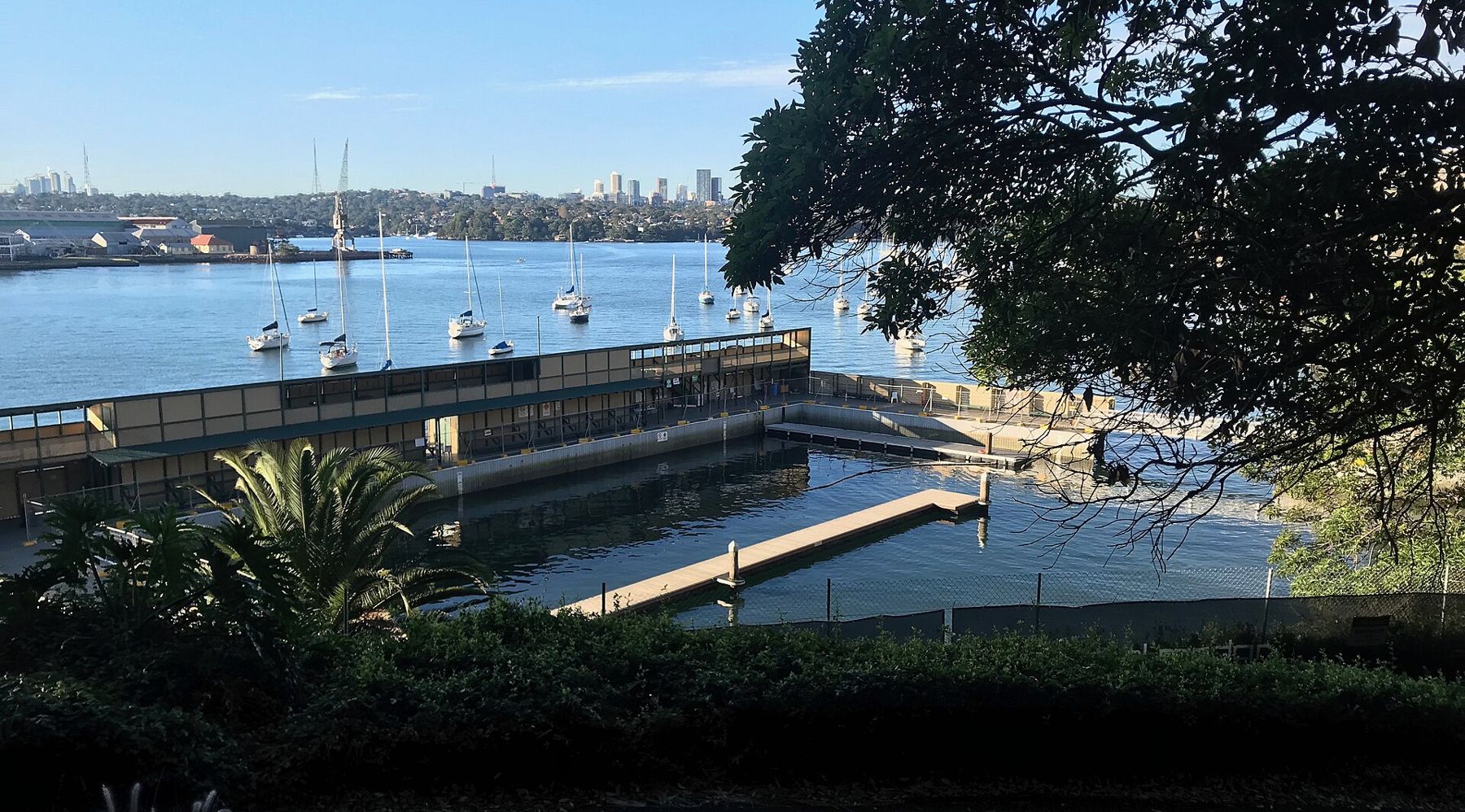
Unlike most of the netted beaches, the baths charge a small entry fee and open only in the warmer months, with set hours. Both change from season to season, so check before you go. Buses run to Balmain from the city, and ferries stop at wharves on the peninsula, from which the baths are a pleasant walk through the old streets.
Water quality after rain
The great weakness of harbour swimming is rain. Stormwater from the streets drains into the harbour through hundreds of outlets, and after heavy rain the water close to shore can carry high levels of bacteria for a day or more. Enclosed bays with little flushing, and spots near creek mouths or drains, are usually worst affected.
The rule is simple: if it has rained heavily in the last day or two, check the state's beach water quality reports before you swim, and choose another day if they advise against it. Murky brown water is a warning sign even when the sun is out. The guide to reading swell and tide covers this alongside the other checks worth making before a swim.
Harbour swimming sense
- Most harbour beaches are not patrolled by lifeguards. Swim with someone, and know your limits.
- Stay inside the nets and enclosures. Boats, ferries and jet skis move fast outside them.
- Do not climb on or swim through the nets.
- Shade is in short supply on the sand: bring a hat and arrive early to claim a tree.
- Late summer, when the harbour water is warmest, is the best season.
The harbour pools make a good contrast with the ocean pools. On a day when the surf is up and the coast pools are closed, the netted bays are often flat and calm. When the sea settles, head back out to the cliffs for a swim at Bronte Baths or one of the other ocean pools.
Neighbouring lanes
The train stops a few minutes' walk from the sand at Cronulla. From there a seaside path links a chain of ocean pools, rock shelves and grassy parks all the way to the mouth of Port Hacking.
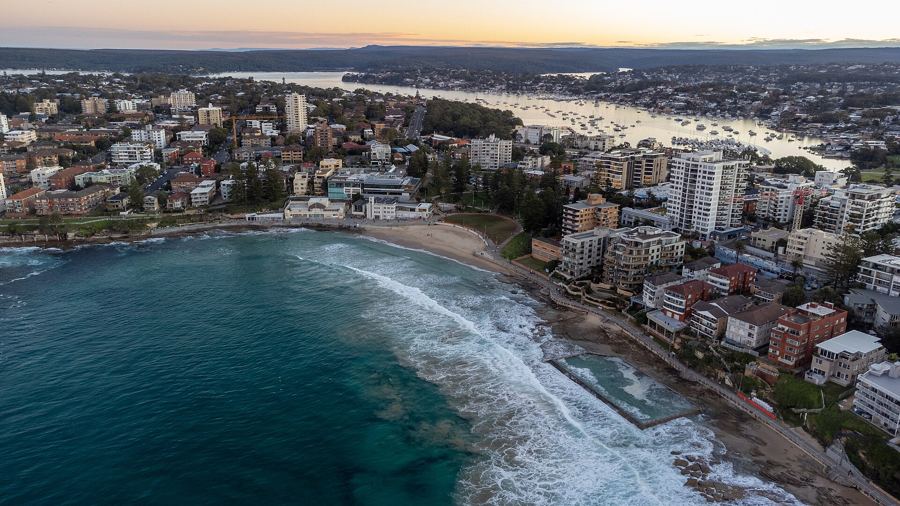
About six kilometres of cliff path link Bondi and Coogee, dipping to a beach every few minutes. Pack goggles: there are ocean pools at almost every bay, and the walk is better wet.